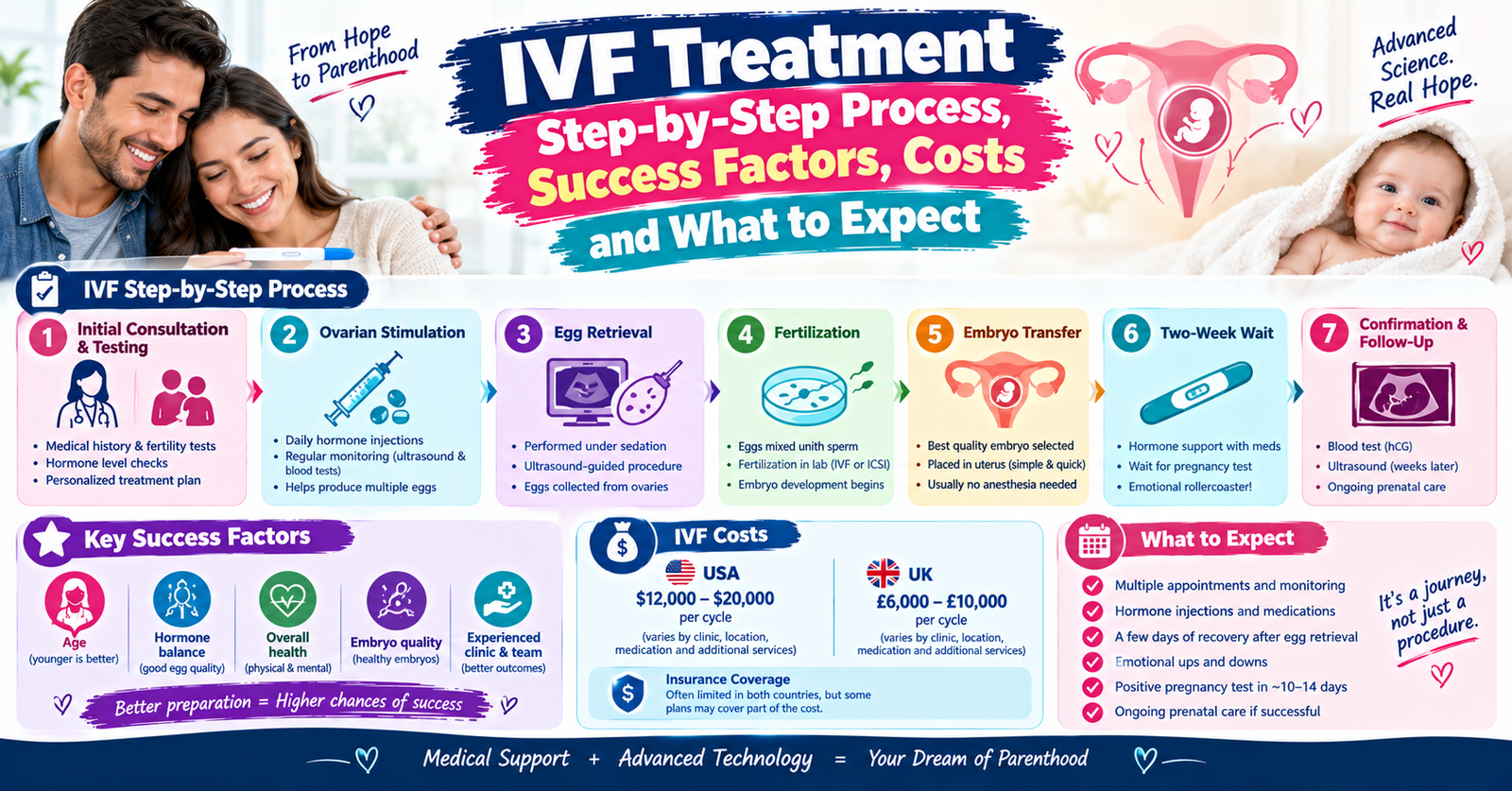
IVF Treatment: Step-by-Step Process, Success Factors, Costs and What to Expect
For many couples and individuals, the decision to try IVF comes after months or years of waiting, tracking, testing and hoping. It’s rarely a casual choice. And the questions that follow are practical ones: What actually happens? How likely is it to work? What will it cost? How much of my life will it take over?
In vitro fertilization (IVF) is now a mainstream part of fertility care. According to national figures from the Society for Assisted Reproductive Technology (SART), more than 100,000 babies were born through IVF in the U.S. in a single year for the first time, in 2024, following nearly 450,000 treatment cycles. This guide walks through the process step by step, what shapes your chances, the real costs, and what the experience tends to feel like.
What Is IVF?
IVF is a form of assisted reproductive technology in which eggs are retrieved from the ovaries, fertilized with sperm in a laboratory, and the resulting embryos are transferred into the uterus (or frozen for later). It’s commonly recommended for blocked or damaged fallopian tubes, endometriosis, low sperm count or motility, ovulation disorders, diminished ovarian reserve, unexplained infertility that hasn’t responded to simpler treatments, and for people using donor eggs, donor sperm or a gestational carrier. It’s also used by single parents and same-sex couples building families.
The IVF Process, Step by Step
Step 1: Initial Consultation and Testing
Your first visit with a reproductive endocrinologist usually includes a medical history review and a set of baseline tests. For the person with ovaries, these may include blood tests such as AMH and FSH, an ultrasound to count antral follicles, and imaging of the uterus and fallopian tubes. A semen analysis is standard for the sperm provider. These results shape your protocol, including medication type and dose.
Step 2: Ovarian Stimulation
Naturally, the body releases one egg a month. IVF aims for several mature eggs in one cycle, so you’ll take injectable hormones (typically FSH-based medications) for roughly 8 to 14 days. Many people give themselves the shots at home after a nurse teaches them how.
During this phase you’ll have frequent monitoring appointments, often every two to three days, with blood work and transvaginal ultrasounds to track follicle growth and adjust your dose. Common side effects include bloating, breast tenderness, mood swings and fatigue.
Step 3: Trigger Shot
When follicles reach the right size, you’ll take a “trigger” injection that finishes maturing the eggs. Timing is precise. Retrieval is scheduled about 34 to 36 hours later, so clinics will tell you the exact minute to inject.
Step 4: Egg Retrieval
Retrieval is a short outpatient procedure done under sedation. Using ultrasound guidance, the doctor passes a thin needle through the vaginal wall to collect fluid from each follicle. It usually takes 15 to 30 minutes. Afterward, mild cramping, spotting and bloating are common, and most people rest for the remainder of the day.
A rare but serious complication is ovarian hyperstimulation syndrome (OHSS). Severe abdominal pain, rapid weight gain, vomiting or trouble breathing should prompt an immediate call to your clinic.
Step 5: Fertilization and Embryo Culture
In the lab, embryologists combine eggs with sperm, either by conventional insemination or by ICSI (intracytoplasmic sperm injection), where a single sperm is injected directly into an egg. ICSI is especially common with male-factor infertility. Embryos are then grown in the lab for about five to six days until many reach the blastocyst stage.
Some patients opt for preimplantation genetic testing (PGT-A) to screen embryos for chromosomal abnormalities. It can be helpful in some situations, such as recurrent miscarriage or older maternal age, but it adds cost and doesn’t suit everyone, so it’s worth discussing the pros and cons with your doctor.
Step 6: Embryo Transfer
A fresh transfer happens days after retrieval, while a frozen embryo transfer (FET) takes place in a later cycle, once your uterine lining has been prepared with medication. Frozen transfers have become very common, partly because they let the body recover from stimulation and allow time for genetic testing.
The transfer itself is quick and usually painless, similar to a Pap smear. A thin catheter places the embryo into the uterus under ultrasound guidance.
Step 7: The Two-Week Wait
About 9 to 14 days later, a blood test measuring hCG shows whether you’re pregnant. Many people find this the hardest part of the entire process. Home pregnancy tests taken too early can give misleading results, so clinics generally ask you to wait for the blood test.
IVF Success Rates: What the Numbers Say
Success rates are the question everyone asks, and age is the biggest factor. SART’s preliminary 2024 national data shows a live birth rate per intended egg retrieval of 41.7% for women under 35, compared with 2.8% for women over 42. These figures count all embryo transfers that come from a single retrieval.
Keep a few points in mind when reading any statistic:
- Averages aren’t predictions. Your own odds depend on your diagnosis, egg and sperm quality, embryo quality and uterine health.
- Many people need more than one try. Success is often measured cumulatively across several transfers from one or more retrievals.
- Clinic comparisons need context. A clinic that treats more complex cases may report lower numbers without being a worse clinic. Look at SART’s clinic-level data and ask how your specific profile compares.
Key Factors That Influence IVF Success
Age of the egg provider. Egg quantity and chromosomal quality decline with age, and this is the strongest predictor of outcomes.
Ovarian reserve. AMH and antral follicle count help estimate how many eggs you may produce, though they say less about egg quality.
Embryo quality. Embryos that reach the blastocyst stage and are chromosomally normal have the best implantation potential.
Sperm health. Sperm quality affects fertilization and embryo development, so male-factor evaluation matters as much as female testing.
Uterine and medical conditions. Fibroids, polyps, endometriosis, thin lining and conditions like PCOS can influence outcomes and are often addressed before transfer.
Lifestyle factors. Not smoking, moderating alcohol and caffeine, maintaining a healthy weight, managing stress and sleeping well all support fertility. They’re not guarantees, but they stack the odds a little more in your favor.
Clinic and lab quality. An experienced embryology lab and a personalized protocol make a measurable difference.
How Much Does IVF Cost in the U.S.?
Cost is often the biggest barrier. The American Society for Reproductive Medicine has estimated that a single IVF cycle in the United States costs roughly $15,000 to $25,000. Many clinics fall in a range of about $14,000 to $30,000 per cycle, plus medication.
Your total bill can include several parts beyond the base fee:
- Fertility medications, often several thousand dollars per cycle
- Monitoring ultrasounds and bloodwork (sometimes bundled)
- ICSI, PGT-A genetic testing and embryo freezing
- Frozen embryo transfers in later cycles
- Annual embryo storage fees
- Anesthesia and lab fees, depending on the clinic
Because many people need more than one cycle, the cost per baby is higher than the cost per cycle. Some clinics offer multi-cycle packages or refund programs, which can help with budgeting, though eligibility rules are strict.
Insurance and Financing
Coverage varies enormously. Some states have fertility insurance mandates, while others have none, and even in mandate states, rules differ on diagnosis requirements and what’s included. Before starting, call your insurer and ask specifically about diagnostic testing, IVF, medications and genetic testing. Also check whether your employer offers a fertility benefit through programs like Progyny or Carrot.
Other ways people manage cost include fertility-specific loans, HSA/FSA funds, clinic payment plans, grants from nonprofits, and medication discount programs.
What to Expect Emotionally and Physically
IVF is as much an emotional journey as a medical one. The schedule of appointments, injections and waiting can strain work, relationships and mental health. Many patients describe feeling anxious, hopeful and exhausted, sometimes in the same hour.
Some things that help: lean on a partner or friend you trust, consider counseling with a therapist experienced in fertility issues, join a support community, and give yourself permission to take breaks between cycles. If a cycle doesn’t work, that’s not a reflection of your effort or worth. Your doctor can review what happened and suggest changes for the next attempt.
Possible Risks of IVF
IVF is generally considered safe, but risks include OHSS, multiple pregnancy if more than one embryo is transferred (which is why single embryo transfer is increasingly recommended), ectopic pregnancy, miscarriage, and the usual risks of sedation and egg retrieval, such as bleeding or infection, which are uncommon. Your clinic will explain these in detail before you consent.
When to Consider IVF
Doctors usually suggest evaluation after 12 months of trying without success if you’re under 35, or after 6 months if you’re 35 or older. If there is a known issue like blocked tubes, severe male factor infertility or very low ovarian reserve, going to IVF sooner can save time. Many specialists also recommend seeing a fertility doctor early rather than waiting, because testing can clarify your options.
Key Takeaways
IVF is a multi-step process that typically takes several weeks per cycle, costs a significant amount, and works better for some people than others, with age being the strongest factor. Understanding each stage, asking your clinic for personalized success estimates, and planning for the financial and emotional side can make the journey feel more manageable.
Disclaimer: This article is for general information only and isn’t medical advice. Fertility treatment is highly individual, so talk to a board-certified reproductive endocrinologist about your own situation.
Sources to link when publishing: SART National Summary Report; CDC ART data; ASRM patient resources; RESOLVE: The National Infertility Association.