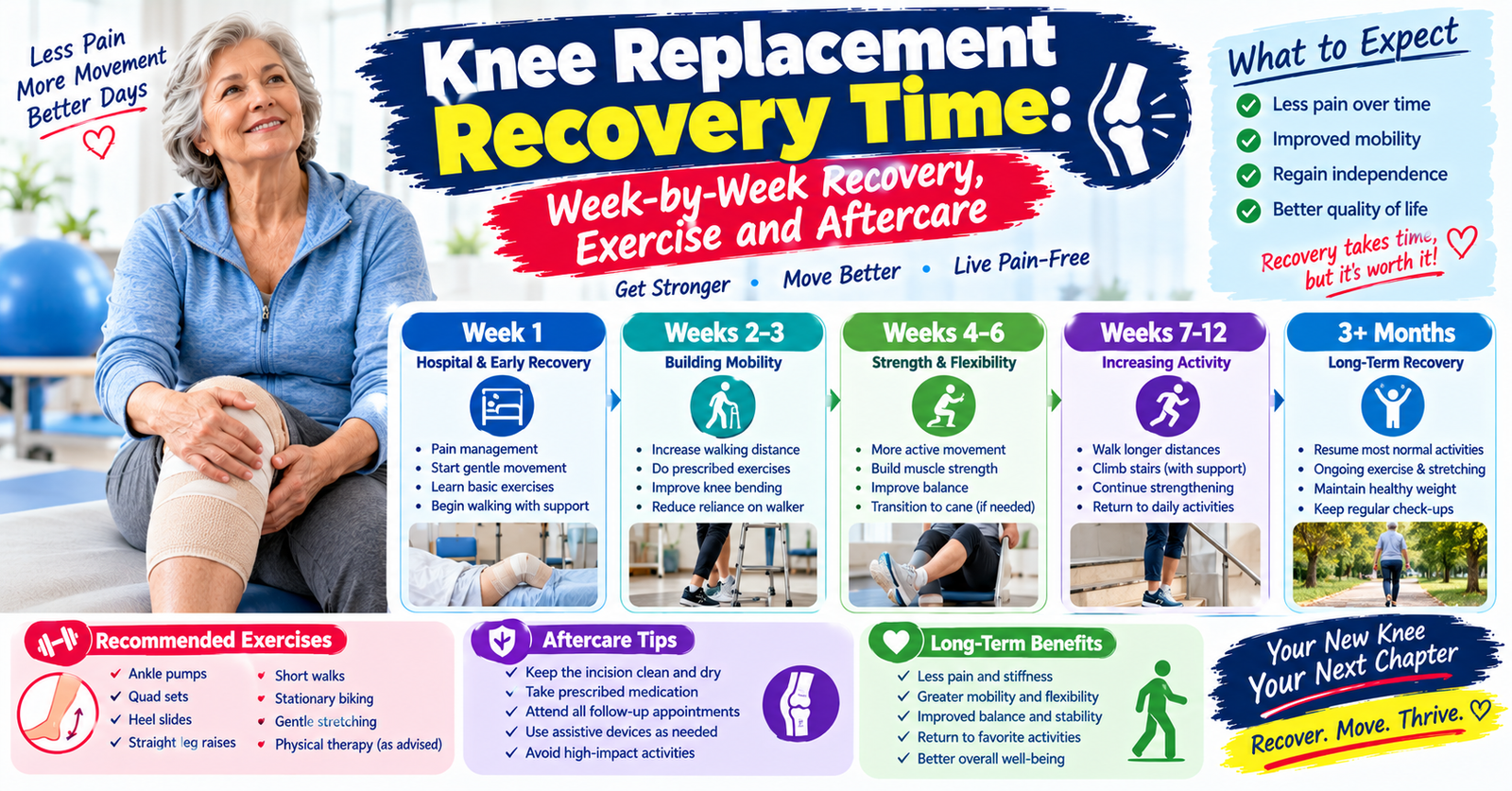
Knee Replacement Recovery Time: Week-by-Week Recovery, Exercise and Aftercare
If you’re about to have a total knee replacement, the question on your mind is probably simple: how long until I feel like myself again? The honest answer is that it depends, but there is a fairly predictable pattern. Most people are walking with support within a day of surgery, back to light daily activities within several weeks, and still noticing improvements for up to a year.
This guide walks through what recovery usually looks like week by week, which exercises matter most, how to manage pain and swelling at home, and when to call your surgeon.
How Long Does Knee Replacement Recovery Take?
Recovery happens in overlapping stages rather than on a fixed schedule:
- Hospital or same-day discharge: Many patients go home within 24 hours, and some the same day. Others stay one to three nights.
- First 6 weeks: Focus on wound healing, swelling control and getting the knee moving.
- 3 months: Most people are off walking aids and back to many normal activities.
- 6 months to 1 year: Strength, endurance and comfort keep improving, and the last bit of swelling can linger.
Your own timeline depends on your age, fitness before surgery, other health conditions, the type of surgery (total versus partial) and, above all, how consistently you do your physical therapy.
Week-by-Week Knee Replacement Recovery Timeline
Day 0 to 3: Getting Up Early
Surgical teams today want you moving quickly. Often within hours of surgery, a physical therapist helps you stand and take your first steps with a walker. Moving early lowers the risk of blood clots, reduces stiffness and speeds recovery.
Expect significant pain, swelling and bruising. You’ll be given pain medication, blood-thinning treatment to prevent clots, and ice or compression to control swelling. Your focus is straightening and bending the knee gently, and walking short distances.
Week 1: Home Base
This is usually the hardest week. Swelling often peaks, the leg may look bruised down to the ankle, and sleep can be broken. Most people use a walker or crutches.
Priorities this week:
- Do your prescribed exercises several times a day
- Elevate your leg and use ice as directed
- Take medication on schedule rather than waiting for pain to spike
- Walk short distances every hour or two while awake
Weeks 2 to 3: Building Range of Motion
Pain gradually becomes more manageable, and many people move from a walker to a cane or crutch. Therapy shifts toward bending the knee further. Surgeons often aim for roughly 90 degrees of bend by around two weeks, and more beyond that, though your team will set specific targets for you.
The incision is typically healing well by now, and stitches or staples may be removed. Keep the wound clean and dry unless told otherwise.
Weeks 4 to 6: Turning a Corner
Many patients notice a real shift here. Walking is steadier, stairs get easier, and you rely less on pain medication. Some people can return to desk work around four to six weeks, particularly if the job isn’t physically demanding. Driving depends on which knee was operated on, whether you’re still taking opioid medication and your reaction time, so wait for your surgeon’s clearance.
Weeks 6 to 12: Strength and Independence
Therapy now emphasizes strength, balance and endurance. You may be walking without any aid, climbing stairs more normally and getting back to activities like gentle cycling or swimming (once the wound is fully healed). Swelling may still flare after busy days, and that’s normal.
3 to 6 Months: Returning to Life
Most people return to many everyday and recreational activities in this window. Low-impact exercise, like walking, stationary cycling, swimming and golf for many patients, is generally encouraged. Your thigh strength and confidence keep growing.
6 to 12 Months: Final Gains
Full recovery can take up to a year. By then, most patients report significantly less pain than before surgery. Some mild stiffness, a tight or warm feeling around the knee, or numbness near the scar can persist longer and often aren’t a problem.
Best Exercises for Knee Replacement Recovery
Your physical therapist will give you a program tailored to you, but these are among the most common early movements:
- Ankle pumps: Move your feet up and down while lying down. This promotes circulation and helps prevent blood clots.
- Heel slides: Lying on your back, slide your heel toward your buttock to bend the knee, then straighten. This builds flexion.
- Quad sets: Tighten the thigh muscle to press the back of the knee into the bed, hold a few seconds, and release. This reactivates the quadriceps, which are often weak after surgery.
- Straight leg raises: Keeping the knee straight, lift the leg a few inches. This strengthens the quad without bending the joint.
- Seated knee bends and extensions: Sitting in a chair, slide the foot back to bend the knee, then straighten it fully.
- Short walks: Frequent, short walks beat one long, exhausting one.
Later in recovery, therapists add stationary cycling, mini-squats, step-ups and balance work.
One point trips up many patients: getting the knee fully straight matters as much as bending it. Losing extension early can affect your walking pattern for a long time.
Managing Pain and Swelling at Home
- Ice and elevation: Raise your leg above heart level and use ice packs for about 15 to 20 minutes at a time, with a cloth barrier to protect your skin.
- Medication on schedule: Pain control before therapy sessions lets you move more effectively. Follow your surgeon’s instructions on opioids and non-opioid medicines.
- Compression and movement: Gentle compression and regular walking help move fluid out of the leg.
- Sleep position: Many people find sleeping on their back with a pillow under the calf, not behind the knee, helps. Avoid propping the knee bent for long periods, as it can encourage stiffness.
Aftercare Tips That Make a Real Difference
Prepare your home beforehand. Clear walkways, remove loose rugs, set up a chair with arms, and arrange a bathroom stool or raised toilet seat if needed. Keep daily items at waist level.
Protect against falls. A fall in the early months is one of the biggest threats to a new knee. Use your walking aid until your therapist clears you.
Stay on top of nutrition and hydration. Protein supports healing, and fiber and fluids help prevent constipation from pain medication.
Don’t skip physical therapy. Surgeons often say the surgery is half the result and rehab is the other half. Patients who do their exercises consistently generally regain better motion and strength.
Tell your dentist and doctors. Some surgeons recommend antibiotics before certain dental or medical procedures in the first period after surgery, so ask what applies to you.
Warning Signs: When to Call Your Surgeon
Contact your care team right away if you notice:
- Fever or chills
- Increasing redness, warmth, drainage or a foul smell from the incision
- Pain, swelling or tenderness in the calf, which can signal a blood clot
- Pain that gets worse despite medication
- The wound opening up
Call emergency services immediately for sudden shortness of breath, chest pain or coughing up blood, which can be signs of a blood clot in the lung.
How Long Does the New Knee Last?
Modern knee implants commonly last 15 to 20 years or longer for many patients, though this varies with age, weight and activity level. Younger, more active patients may eventually need a revision surgery.
Key Takeaways
Knee replacement recovery is a marathon rather than a sprint. Expect the first two weeks to be the toughest, noticeable gains by six weeks, solid function by three months, and continued progress through the first year. The patients who do best tend to start moving early, stay consistent with therapy and speak up quickly when something feels wrong.
Disclaimer: This article is for general information only and doesn’t replace advice from your orthopedic surgeon or physical therapist. Recovery timelines vary, so always follow your own care team’s instructions.
Sources to link when publishing: American Academy of Orthopaedic Surgeons (OrthoInfo); Mayo Clinic; Cleveland Clinic.