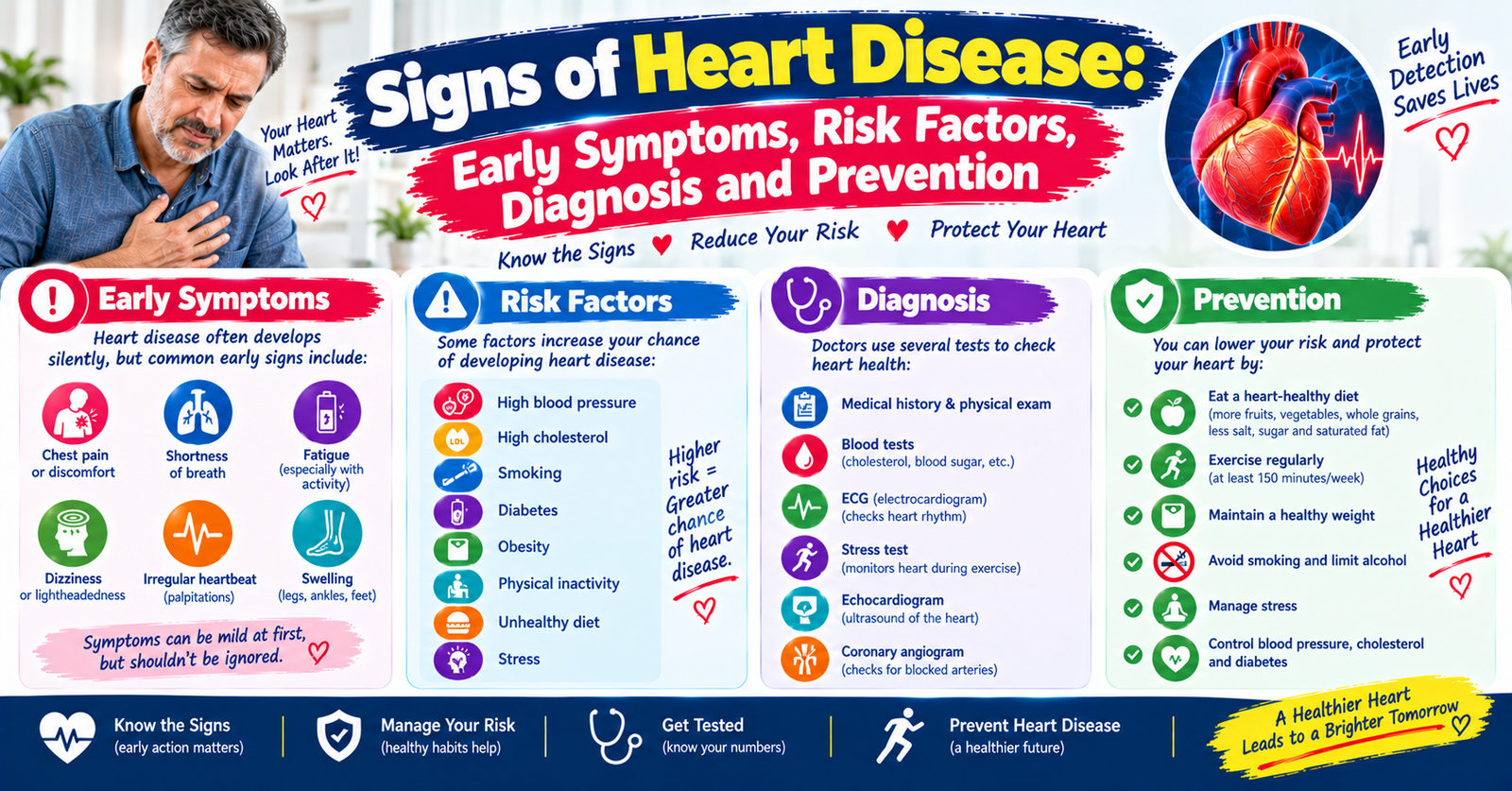
Signs of Heart Disease: Early Symptoms, Risk Factors, Diagnosis and Prevention
When most people picture a heart problem, they picture a man clutching his chest in the middle of a crowded room. Real life is quieter and more varied than that. Heart disease can announce itself as unusual tiredness, breathlessness on a flight of stairs, or a vague pressure that comes and goes for weeks, and many people brush these off because they don’t match the movie version.
That gap between expectation and reality matters, because heart disease is still the leading cause of death in the United States. The CDC reports that someone in the U.S. has a heart attack about every 40 seconds, roughly 805,000 people a year, and that coronary heart disease is the most common type. The American Heart Association’s 2026 statistics update puts heart disease deaths at 680,981 in 2023.
The encouraging side of the story is that the risk is far more modifiable than most people think. This guide covers the early signs of heart disease, who is at risk, how it’s diagnosed, and what actually helps prevent it.
What Is Heart Disease?
“Heart disease” isn’t a single condition. It’s a group of problems affecting the heart and blood vessels, including:
- Coronary artery disease (CAD): Plaque builds up in the arteries that feed the heart muscle, narrowing them and reducing blood flow. This is the most common type.
- Heart failure: The heart can’t pump blood as efficiently as the body needs. It doesn’t mean the heart has stopped.
- Arrhythmias: Abnormal heart rhythms, such as atrial fibrillation.
- Valve disease: Problems with the valves that control blood flow through the heart.
- Congenital heart defects: Structural problems present from birth.
- Cardiomyopathy: Disease of the heart muscle itself.
Early Warning Signs of Heart Disease
Symptoms often depend on the type of heart condition, and some people have none until a serious event occurs. These are the signs most commonly linked to heart problems.
1. Chest discomfort (angina). It may feel like pressure, squeezing, fullness or heaviness rather than sharp pain. It often shows up with exertion or stress and eases with rest. Chest discomfort that lasts more than a few minutes, or that comes with other symptoms, is an emergency.
2. Shortness of breath. Getting winded doing things that used to be easy, like climbing stairs or walking to the mailbox, can signal that the heart isn’t keeping up. Breathlessness when lying flat is another red flag, particularly for heart failure.
3. Unusual fatigue. Deep tiredness that doesn’t improve with rest, especially in women, is sometimes the earliest and only sign.
4. Pain that spreads. Discomfort can radiate to the left arm, shoulder, neck, jaw, upper back or upper abdomen. Jaw and back pain are commonly overlooked.
5. Palpitations or a racing or irregular heartbeat. Occasional skipped beats are common, but frequent fluttering, pounding or a heartbeat that feels chaotic deserves evaluation, particularly if it comes with dizziness.
6. Swelling in the legs, ankles or feet. Fluid retention can be a sign of heart failure. Some people also notice sudden weight gain over a few days.
7. Dizziness or lightheadedness. Feeling faint, or actually passing out, can be tied to rhythm problems or reduced blood flow.
8. Cold sweats, nausea or indigestion-like discomfort. These are frequently mistaken for a stomach problem, especially during a heart attack.
9. Leg pain when walking. Cramping in the calves that goes away with rest may indicate peripheral artery disease, a related condition that often travels with coronary disease.
Do Men and Women Have Different Symptoms?
Yes, often. Men are more likely to describe the classic crushing chest pain. Women are more likely to experience atypical symptoms such as nausea, shortness of breath, back or jaw pain, unusual fatigue and indigestion-like discomfort, with or without chest pain. This difference is one reason women’s heart attacks are sometimes recognized late.
The takeaway is simple: don’t wait for the “textbook” symptom. If something feels off and new, get it checked.
When to Call 911
Don’t drive yourself, and don’t wait to see if it passes. Call emergency services immediately if you or someone else has:
- Chest pain, pressure or tightness lasting more than a few minutes
- Pain spreading to the arm, jaw, neck or back
- Sudden shortness of breath, cold sweat, nausea or lightheadedness along with chest discomfort
- Fainting, or a rapid heartbeat with dizziness or chest pain
- Sudden weakness, face drooping, trouble speaking or vision loss, which are signs of a stroke
Time is muscle. The faster blood flow is restored during a heart attack, the more heart tissue can be saved.
Major Risk Factors for Heart Disease
Some risk factors can be changed, while others can’t. Both matter.
Risk factors you can influence:
- High blood pressure. It damages artery walls over time, and AHA data indicates that nearly 47% of U.S. adults have it, often without knowing.
- High LDL (“bad”) cholesterol and high triglycerides
- Smoking and tobacco use, including long-term vaping and secondhand smoke exposure
- Diabetes and prediabetes, which accelerate artery damage
- Excess weight, especially around the waist
- Physical inactivity
- An unhealthy diet high in processed foods, added sugar, sodium and trans or saturated fats
- Heavy alcohol use
- Chronic stress and poor sleep, including untreated sleep apnea
Risk factors you can’t change:
- Age. Risk rises as arteries stiffen and plaque accumulates.
- Family history, particularly a parent or sibling with early heart disease (before 55 in men, 65 in women)
- Sex and ethnicity. South Asian adults, for example, often develop heart disease earlier and at lower body weights, a pattern doctors increasingly recognize.
- Pregnancy-related conditions such as preeclampsia and gestational diabetes, which are linked to higher long-term cardiovascular risk in women
How Heart Disease Is Diagnosed
Diagnosis typically starts with your history, a physical exam and basic lab work, then moves to heart-specific testing if needed.
- Blood pressure and cholesterol checks. Simple and informative, these are the first look at your risk.
- Blood tests, including lipid panel, blood sugar or A1C, and markers such as troponin during a suspected heart attack.
- Electrocardiogram (ECG/EKG). Records the heart’s electrical activity and can spot rhythm problems or signs of past or ongoing damage.
- Echocardiogram. An ultrasound of the heart that shows structure, valve function and pumping strength.
- Stress test. Monitors the heart during exercise, or with medication that simulates exertion, to see how it responds to demand.
- Coronary calcium scan. A CT scan that measures calcified plaque in the coronary arteries, helpful for refining risk in people with unclear risk levels.
- Coronary CT angiography or cardiac catheterization. Imaging that looks directly at the arteries and can allow treatment, such as placing a stent, during the same procedure.
- Wearable and ambulatory monitors such as a Holter or patch monitor for intermittent rhythm problems.
Treatment at a Glance
Treatment depends on the condition, but typically combines lifestyle changes, medications (such as statins, blood pressure drugs, blood thinners or rhythm-controlling drugs), and procedures like angioplasty with stents, bypass surgery, pacemakers or valve repair when necessary. Cardiac rehabilitation, a supervised exercise and education program, is strongly recommended after many heart events and procedures and improves outcomes.
How to Prevent Heart Disease
The American Heart Association emphasizes that most cardiovascular disease is preventable through sustained habits and early management of risk factors. These steps carry the most weight:
Eat for your heart. Build meals around vegetables, fruits, whole grains, legumes, nuts, fish and olive oil. Cut back on processed meat, sugary drinks, refined carbs and excess sodium. A Mediterranean-style or DASH-style pattern is well supported by research.
Move regularly. Aim for at least 150 minutes of moderate activity a week, such as brisk walking, cycling or swimming, plus two days of strength training. Sitting less throughout the day also helps.
Don’t smoke. Quitting is among the most powerful things you can do, and risk begins to drop soon after you stop.
Know your numbers. Get blood pressure, cholesterol, and blood sugar checked regularly, and ask your doctor how often you should be tested based on your age and history. Many people with high blood pressure or cholesterol feel perfectly fine.
Maintain a healthy weight. Even a modest reduction can lower blood pressure, cholesterol and blood sugar.
Prioritize sleep. Most adults need seven or more hours. Loud snoring with daytime sleepiness warrants a sleep apnea evaluation.
Manage stress and mental health. Depression and chronic stress are linked to worse heart outcomes. Exercise, therapy, social connection and mindfulness all help.
Limit alcohol. If you drink, keep it moderate, and recognize that less is better for the heart.
Take medications as prescribed. If you’ve been given a statin or blood pressure medicine, consistency matters more than perfection on any one day.
When to See a Doctor (Non-Emergency)
Schedule a visit if you notice recurring shortness of breath, ongoing unusual fatigue, swelling in your legs, episodes of palpitations or dizziness, or leg pain when you walk. Also book a checkup if you have several risk factors, a family history of early heart disease, or haven’t had your blood pressure and cholesterol checked in the past few years. Many adults are advised to begin regular screening in their 20s and to get a more detailed risk assessment in their 40s.
Key Takeaways
Heart disease can be quiet, and its warning signs often look like ordinary tiredness or indigestion. The most useful habits are learning the less-obvious symptoms, knowing your own risk factors, getting basic screening done and treating chest pain or sudden breathlessness as an emergency. Small, consistent changes in diet, movement, sleep and tobacco use add up to a meaningfully lower risk over time.
Disclaimer: This article is for general information only and isn’t a substitute for professional medical advice, diagnosis or treatment. If you think you’re having a heart attack or stroke, call 911 right away.
Sources to link when publishing: CDC Heart Disease Facts; American Heart Association Heart Disease and Stroke Statistics (2026 update); NHLBI (NIH) Heart Health resources.