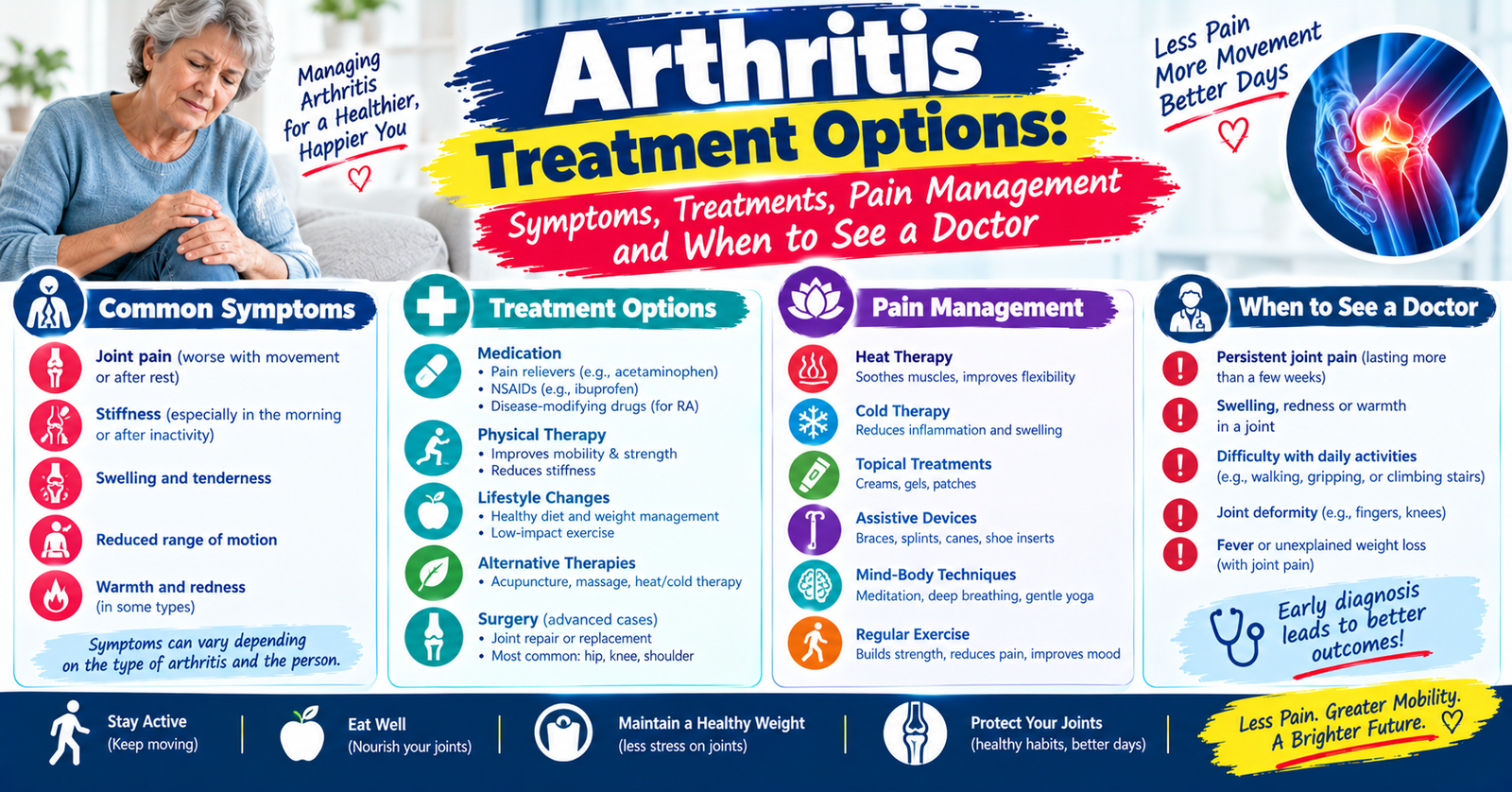
Arthritis Treatment Options: Symptoms, Treatments, Pain Management and When to See a Doctor
The first sign is often small. Stiff fingers in the morning that take a while to loosen. A knee that aches after the stairs. A swollen wrist that you blame on typing too much. Because these changes creep in, many people live with joint pain for months or years before they ask what’s behind it.
They’re far from alone. A CDC analysis of national survey data from 2019 to 2021 found that arthritis had been diagnosed in about 53.2 million U.S. adults, and nearly 9 in 10 of them were 45 or older. Projections put that number at more than 78 million by 2040.
The encouraging part is that arthritis is more treatable than most people assume. This guide explains the main types, the symptoms to watch for, the full range of treatment options, daily pain management strategies, and the signs that mean it’s time to see a doctor.
What Is Arthritis?
Arthritis isn’t one disease. It’s an umbrella term for more than 100 conditions that cause pain, swelling and stiffness in or around the joints. The two most common forms are very different:
Osteoarthritis (OA) is the “wear-and-tear” type, though that description is a bit outdated. The cartilage that cushions the ends of bones gradually breaks down, and the joint tissues around it change. It most often affects the knees, hips, hands and spine.
Rheumatoid arthritis (RA) is an autoimmune disease in which the immune system mistakenly attacks the lining of the joints. It tends to affect joints on both sides of the body, such as both wrists or both hands, and can also affect organs and cause whole-body fatigue.
Other types include psoriatic arthritis, gout (caused by uric acid crystals), ankylosing spondylitis, and juvenile idiopathic arthritis in children. Treatment depends heavily on which type you have, which is why a proper diagnosis matters.
Common Arthritis Symptoms
Symptoms vary, but these are the most common:
- Joint pain that may be dull, aching or sharp, and often worsens with activity (OA) or after rest (RA)
- Stiffness, especially in the morning or after sitting. In OA it typically eases within 30 minutes, while in RA it can last an hour or more
- Swelling and warmth around a joint
- Reduced range of motion, such as trouble making a fist or fully straightening a knee
- Redness over the joint, particularly in gout or inflammatory types
- Fatigue and low-grade fever, more common with inflammatory arthritis like RA
- Grating or cracking sensations in OA when the joint moves
- Visible changes, such as bony knobs on finger joints or deformity in advanced cases
Gout deserves a special mention. It often strikes suddenly, commonly in the big toe, with intense pain, swelling and redness, sometimes waking people at night.
Who Is Most at Risk?
Several factors raise the odds:
- Age. Risk climbs steadily after 45.
- Sex. Arthritis is more common in women overall, and RA especially affects women. In the CDC data, age-standardized prevalence was higher in women than in men (20.9% vs 16.3%).
- Family history and genetics
- Previous joint injuries, such as ACL tears, fractures or repetitive stress
- Excess weight, which adds load to the knees and hips and promotes inflammation
- Smoking, which raises the risk of developing RA and can make it more severe
- Certain jobs that involve repetitive kneeling, squatting or heavy lifting
- Other health conditions, including diabetes and heart disease
How Arthritis Is Diagnosed
A doctor will start with your history, a physical exam of the joints, and questions about the pattern of your symptoms. Depending on what they suspect, tests may include:
- X-rays to check for cartilage loss, bone spurs and joint space narrowing
- MRI or ultrasound for soft tissue and early inflammatory changes
- Blood tests such as rheumatoid factor, anti-CCP antibodies, ESR and CRP (inflammation markers), and uric acid for gout
- Joint fluid analysis, where fluid is drawn from a swollen joint to look for crystals, infection or inflammation
Early diagnosis matters most for inflammatory types like RA, where treatment started early can limit permanent joint damage.
Arthritis Treatment Options
There is no single fix, and the best plan usually combines several approaches. The goals are to relieve pain, protect the joints, preserve function and slow disease progression where possible.
1. Lifestyle and Self-Management
This is the foundation of treatment for nearly every type of arthritis.
Exercise. It may seem backwards to move a painful joint, but regular activity strengthens the muscles that support the joint, improves flexibility and reduces stiffness. Low-impact options like walking, swimming, cycling, tai chi and yoga are usually well tolerated.
Weight management. Extra weight places stress on weight-bearing joints, so even modest weight loss can ease knee and hip pain.
Heat and cold. Warm showers or heating pads relax stiff joints, while cold packs can calm acute swelling.
Joint protection. Using larger joints for tasks, taking breaks, and using supportive tools such as jar openers or ergonomic handles reduces strain.
2. Medications
Medication choices depend on the type of arthritis, how severe it is and your other health conditions, so these should always be guided by your doctor.
- Over-the-counter pain relievers, including acetaminophen and NSAIDs such as ibuprofen or naproxen, which reduce pain and inflammation. Long-term NSAID use can affect the stomach, kidneys and heart, so it needs medical oversight.
- Topical treatments, including NSAID gels and capsaicin creams, which can help hand and knee arthritis with fewer whole-body effects.
- Corticosteroids, taken by mouth or injected into a joint, which can quickly calm a flare but aren’t a long-term solution.
- DMARDs (disease-modifying antirheumatic drugs), such as methotrexate, which slow the immune activity behind RA and other inflammatory arthritis.
- Biologics and targeted therapies, which block specific parts of the immune response and are used when conventional DMARDs aren’t enough.
- Gout-specific medications, which treat acute attacks and lower uric acid over the long run.
3. Physical and Occupational Therapy
A physical therapist designs exercises to improve strength, balance and range of motion, while an occupational therapist helps you adapt daily tasks and recommends braces, splints or assistive devices. Many people find that working with a therapist for even a few sessions builds a routine they can carry on at home.
4. Injections and Procedures
- Corticosteroid injections can offer relief lasting weeks to months.
- Hyaluronic acid injections are sometimes tried for knee osteoarthritis, although evidence on their benefit is mixed, so discuss expectations with your doctor.
- Radiofrequency ablation can reduce chronic pain in certain joints by interrupting pain signals.
5. Surgery
When pain and loss of function seriously affect daily life and other treatments haven’t worked, surgery may be an option. Joint replacement of the hip or knee is among the most common, and often highly successful, procedures. Other options include joint resurfacing, fusion and arthroscopic procedures.
6. Complementary Approaches
Some people find relief with acupuncture, massage, mindfulness and meditation, or supplements. The research is inconsistent for many of these, and some supplements interact with medicines, so check with your doctor before starting anything new.
Daily Pain Management Tips
Beyond formal treatment, small habits can make living with arthritis noticeably easier:
- Pace yourself. Alternate activity with rest, and don’t save all your tasks for one “good day.”
- Keep moving. Long periods of inactivity can worsen stiffness. Set a reminder to stand and stretch each hour.
- Prioritize sleep. Pain and poor sleep feed each other. A consistent routine and a supportive mattress help.
- Eat an anti-inflammatory pattern. A Mediterranean-style diet rich in fish, vegetables, olive oil, nuts and whole grains is widely recommended for overall health and may help with inflammation. People with gout should also limit alcohol, especially beer, and sugary drinks.
- Manage stress. Stress can intensify pain perception and trigger flares in some people.
- Wear supportive footwear and use a cane or brace if recommended.
- Don’t smoke. Quitting benefits your joints, your heart and your response to treatment.
- Seek support. Chronic pain can affect mood. Support groups and counseling can make a real difference.
When to See a Doctor
Make an appointment if you have:
- Joint pain or swelling lasting more than a few days or that keeps returning
- Morning stiffness lasting more than 30 minutes
- Pain that interferes with sleep, work or everyday tasks
- Multiple joints affected, or symmetrical joint swelling
- Fatigue, low fever or weight loss along with joint symptoms
Seek urgent care if a joint suddenly becomes hot, red, very swollen and painful, especially with a fever, since this can signal a joint infection (septic arthritis) that needs prompt treatment. The same goes for an inability to move or bear weight on a joint after an injury.
For suspected inflammatory arthritis, ask for a referral to a rheumatologist. Seeing a specialist early can protect your joints for the long term.
Can Arthritis Be Prevented?
Not every case can be prevented, but you can lower your risk. Maintaining a healthy weight, staying active, protecting your joints from injury, not smoking and managing conditions like diabetes all help. The CDC notes that a meaningful share of rheumatoid arthritis cases may be preventable through changes like these.
Key Takeaways
Arthritis is common, but it doesn’t have to mean a life of constant pain. Knowing the symptoms, getting the right diagnosis and building a treatment plan that mixes movement, medication where needed, and smart daily habits can keep you active for years. If joint pain has been lingering, don’t wait it out. An early conversation with your doctor is the best first step.
Disclaimer: This article is for general information only and isn’t a substitute for professional medical advice, diagnosis or treatment. Always consult a qualified healthcare provider about your condition.
Sources to link when publishing: CDC Arthritis Basics and MMWR prevalence report; Arthritis Foundation; American College of Rheumatology patient resources; NIAMS (NIH).