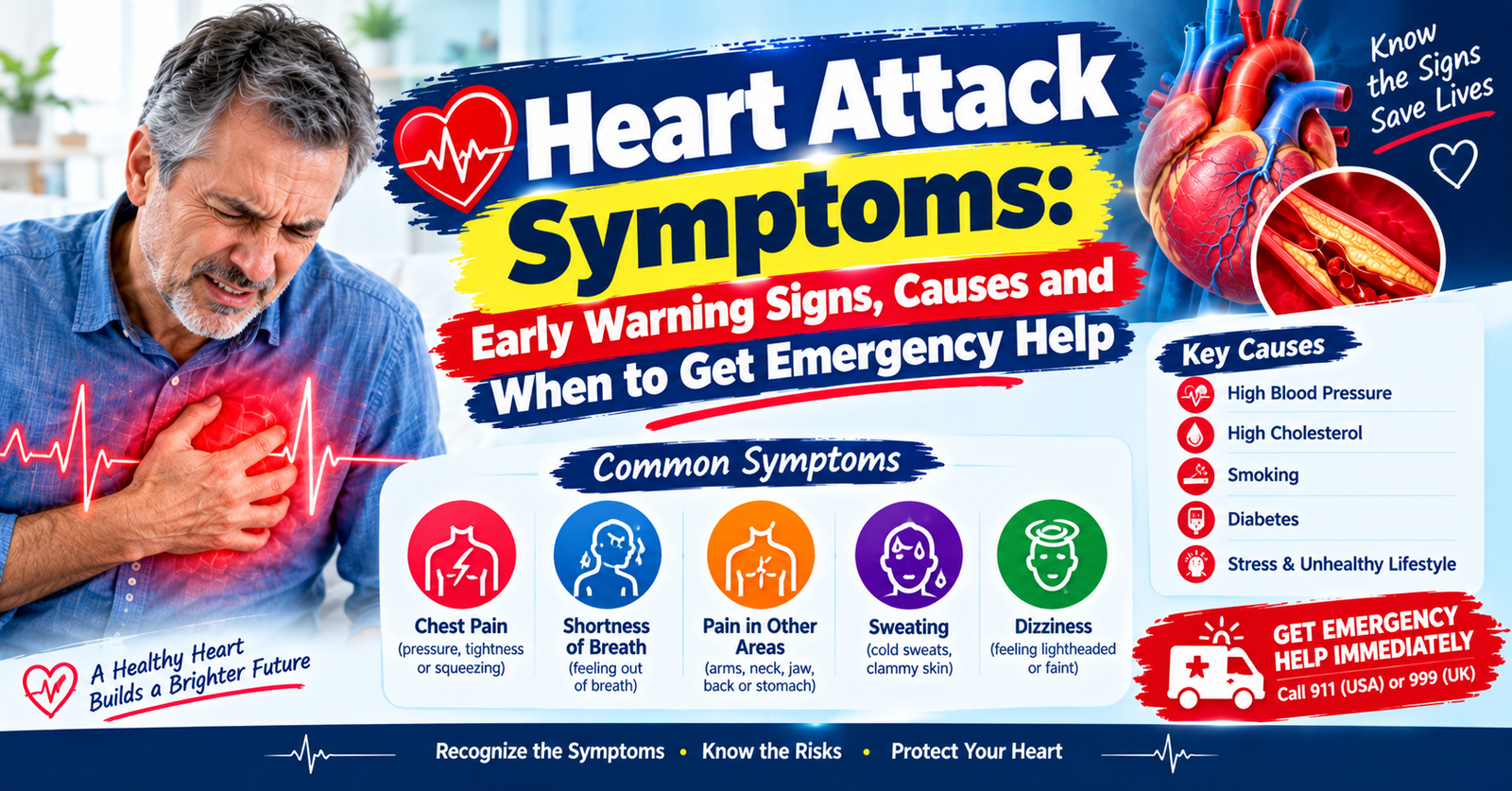
Heart Attack Symptoms: Early Warning Signs, Causes and When to Get Emergency Help
Emergency: If you think you or someone else is having a heart attack, call 911 (US) or 999/112 (UK) immediately. Do not wait to see if symptoms pass, and do not drive yourself to the hospital.
A heart attack happens when blood flow to part of the heart muscle is suddenly reduced or cut off. In the United States, one strikes someone about every 40 seconds. The sooner blood flow is restored, the less heart muscle is lost,
which is why recognizing the signs early can save both lives and long-term heart function. This guide explains the warning signs, how they can differ in women and other groups, what causes a heart attack, and what to do in an emergency.
What Is a Heart Attack?
A heart attack, medically called a myocardial infarction, usually occurs when a blood clot blocks a coronary artery, often after a fatty plaque inside the artery wall breaks open. Without oxygen-rich blood, the affected heart muscle begins to be damaged. The longer the blockage lasts, the greater the damage.
Common Heart Attack Symptoms
The most common symptom for both men and women is chest pain or discomfort, usually in the center of the chest. It may feel like pressure, tightness, squeezing, fullness or aching. Other warning signs include:
- Discomfort in other parts of the upper body: one or both arms, the shoulder, back, neck, jaw, teeth or upper belly
- Shortness of breath, with or without chest discomfort
- Cold sweat
- Nausea or vomiting
- Lightheadedness or sudden dizziness
- Unusual fatigue
- Indigestion or heartburn-like discomfort
- An overwhelming sense of anxiety, sometimes described as similar to a panic attack
A heart attack usually causes chest pain that lasts more than a few minutes, or that goes away and comes back. The pain can be mild or severe. You do not need to have every symptom, and severity does not always match how serious the attack is, so it is the combination of symptoms that matters.
Heart Attack Symptoms in Women
Women’s most common symptom is also chest pain or discomfort. But women are somewhat more likely than men to have other symptoms, such as shortness of breath, nausea or vomiting, and back or jaw pain. Some describe upper back pressure that feels like squeezing or a rope being tied around them.
Because these symptoms can seem unrelated to the heart, women often put them down to acid reflux, the flu or aging, and may delay getting help. Heart disease is the leading cause of death for women in the US, so never dismiss unusual symptoms.
Older Adults and People With Diabetes
Symptoms can be less obvious in older adults and in people with diabetes. They may have only nausea, brief or sharp pain in the neck, arm or back, or unexplained fatigue. Older people may also faint. A past heart attack is no guarantee the next one will feel the same.
Early Warning Signs Days or Weeks Before
Some heart attacks strike suddenly, but many people have warning signs hours, days or even weeks in advance. Chest pressure or pain (angina) that keeps happening and does not go away with rest may be an early warning sign. Increasing breathlessness on exertion or unusual tiredness can also be clues. If you notice new or worsening symptoms, see a doctor promptly. If they are severe or persistent, call emergency services.
What Causes a Heart Attack?
Most heart attacks are caused by coronary artery disease, where plaque made of cholesterol, fat and other substances builds up in the arteries over years. When a plaque ruptures, a clot forms and can block blood flow. Less common causes include a spasm of a coronary artery, a tear in an artery wall (spontaneous coronary artery dissection, which can affect younger women), and drug use such as cocaine.
Risk factors include:
- High blood pressure and high cholesterol
- Smoking or vaping nicotine
- Diabetes
- Overweight or obesity
- Physical inactivity and an unhealthy diet
- Family history of early heart disease
- Age (risk rises as you get older)
- Chronic stress and heavy alcohol use
Heart Attack vs Cardiac Arrest vs Angina vs Panic Attack
These terms are often confused:
- Heart attack: a circulation problem, where blood flow to the heart muscle is blocked. The person is usually awake and breathing.
- Cardiac arrest: an electrical problem, where the heart suddenly stops pumping effectively. The person collapses, is unresponsive and is not breathing normally. Call emergency services and start CPR.
- Angina: chest pain caused by reduced blood flow to the heart that is usually triggered by exertion and eases with rest or prescribed medication. New or worsening angina can be a warning of a heart attack.
- Panic attack or indigestion: can mimic a heart attack, and even doctors often cannot tell without tests. If in doubt, get checked.
When to Call Emergency Services
Call 911 or 999 immediately if you have symptoms that could be a heart attack, even if you are unsure or the pain is mild. The American Heart Association advises calling even if you are not certain, and NHS England’s campaign stresses that calling is never wasting NHS time.
Why call an ambulance instead of driving? Paramedics can begin treatment on the way, monitor your heart and alert the hospital. Mild symptoms can also worsen quickly, and if your heart stops you will need trained help immediately.
What to Do While Waiting for the Ambulance
- Call emergency services first. Tell the operator you think someone is having a heart attack, and stay on the line if asked.
- Stop and rest. Sit down or lie in a comfortable position, and avoid any exertion.
- Unlock the door if you are alone, so paramedics can reach you.
- Aspirin: Guidance differs slightly by country, so follow the advice of the emergency operator. In the UK, the NHS advises chewing and swallowing one 300 mg aspirin if you are not allergic and have not been told otherwise. In the US, Mayo Clinic and others advise taking aspirin only if your healthcare professional or emergency operator recommends it, and never delaying the call to do so. Do not give aspirin to people who are allergic, and St John Ambulance advises not giving it to anyone under 16.
- If the person becomes unresponsive and is not breathing normally, begin CPR and use an automated external defibrillator (AED) if one is available.
How Doctors Diagnose and Treat a Heart Attack
On arrival, you will get an electrocardiogram (ECG) to check your heart’s electrical activity, along with blood tests for heart muscle damage. You may then have a coronary angiogram to see the blocked artery.
Treatment aims to restore blood flow as quickly as possible. Depending on the situation, this may involve clot-dissolving medication, angioplasty with a stent (percutaneous coronary intervention), or sometimes bypass surgery. You will also be started on medications to protect the heart and reduce the chance of another attack. After hospital care, cardiac rehabilitation is strongly recommended.
Recovery and Prevention
Many people make a good recovery after a heart attack, although it depends on how much heart muscle was damaged. Recovery usually includes medication, cardiac rehab, regular check-ups and lifestyle changes.
To reduce your risk:
- Stop smoking and limit alcohol
- Eat a balanced, heart-healthy diet
- Stay physically active, as your doctor advises
- Control blood pressure, cholesterol and blood sugar
- Maintain a healthy weight and manage stress
- Get regular checkups, such as the free NHS Health Check in England for ages 40 to 74
Never start or stop aspirin or other heart medication without medical advice.
Frequently Asked Questions
Q: What are the first signs of a heart attack? Chest pressure, tightness or pain, often with pain spreading to the arm, jaw or back, plus shortness of breath, sweating or nausea.
Q: Can a heart attack happen without chest pain? Yes, especially in women, older adults and people with diabetes.
Q: How long does heart attack pain last? Typically more than a few minutes, or it may come and go. Do not wait to see if it passes.
Q: Should I drive myself to the hospital? No. Call 911 or 999 instead.
Q: Is a heart attack the same as cardiac arrest? No. A heart attack is a blocked artery, while cardiac arrest is when the heart stops pumping effectively.
Medical disclaimer: This article is for general information only and is not a substitute for professional medical advice, diagnosis or treatment. If you think you are having a heart attack, call your local emergency number immediately.