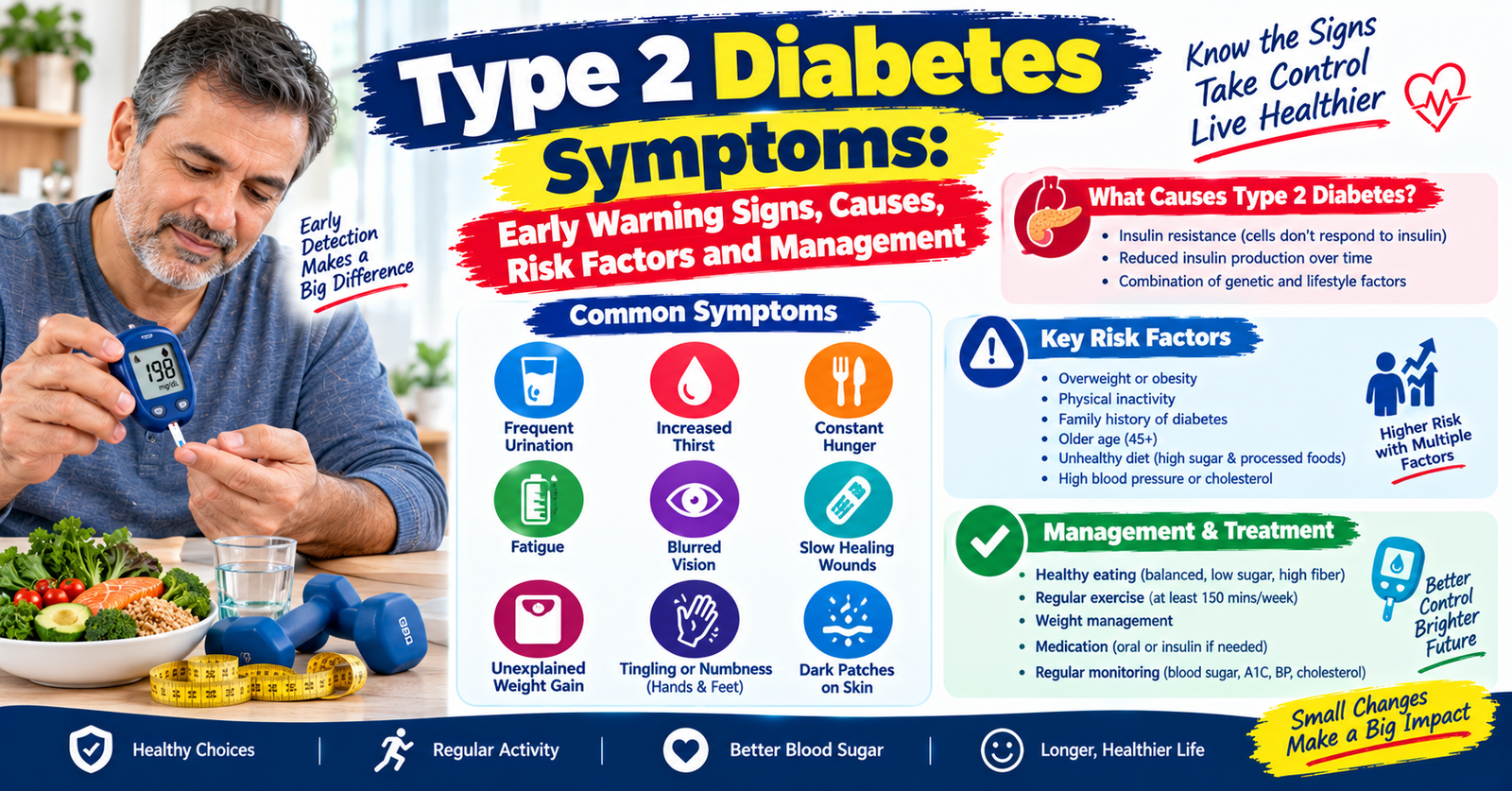
Type 2 Diabetes Symptoms: Early Warning Signs, Causes, Risk Factors and Management
Most people don’t wake up one morning knowing they have diabetes. Type 2 diabetes tends to creep in. A little more thirst than usual, a few extra trips to the bathroom, a tiredness that coffee doesn’t fix. Each sign is easy to explain away, which is exactly why so many cases go unnoticed for years.
The numbers show how common that is. The CDC estimates that about 40.1 million people in the United States, roughly 12% of the population, have diagnosed or undiagnosed diabetes, and around 27.6% of adults with diabetes, about 11 million people, don’t know they have it. On top of that, an estimated 115.2 million U.S. adults have prediabetes.
If you’ve been searching for type 2 diabetes symptoms, this guide covers what to look for, why it happens, who is most at risk, and what management really looks like day to day.
What Is Type 2 Diabetes?
In type 2 diabetes, the body either stops responding properly to insulin (insulin resistance) or doesn’t make enough of it. Insulin is the hormone that moves sugar from your blood into your cells for energy. When it doesn’t work well, sugar builds up in the bloodstream, and over time that high blood sugar damages blood vessels, nerves, kidneys, eyes and the heart.
Type 2 makes up an estimated 90% to 95% of all diabetes cases. It is different from type 1, which is an autoimmune condition where the body stops producing insulin altogether, and it usually develops gradually rather than suddenly.
Early Warning Signs of Type 2 Diabetes
Symptoms can be mild or completely absent at first. These are the signs doctors most often point to:
1. Increased thirst and frequent urination. When blood sugar is high, the kidneys work overtime to flush out the excess through urine. That pulls fluid from the body, so you feel thirsty and keep drinking, and keep urinating. Waking up two or three times a night to use the bathroom is a common early clue.
2. Constant fatigue. If your cells can’t take in glucose properly, they’re short on fuel even though your blood is full of sugar. The result is tiredness that doesn’t match how much you slept or worked.
3. Blurred vision. High glucose can cause the lens of the eye to swell, making your vision go in and out of focus. It often improves when blood sugar comes down, but it should never be ignored, because long-term high sugar can damage the retina.
4. Slow-healing cuts and frequent infections. Elevated blood sugar affects circulation and immune function. Small wounds, especially on the feet, may take much longer to heal, and yeast infections, skin infections and urinary tract infections can become frequent.
5. Tingling, numbness or burning in the hands and feet. This is a sign of nerve damage (neuropathy), which can start even before diabetes is formally diagnosed.
6. Darkened patches of skin. Dark, velvety skin around the neck, armpits or groin is called acanthosis nigricans. It is strongly linked to insulin resistance and is often noticed first by a dermatologist.
7. Unexplained weight changes and increased hunger. Some people feel hungry more often because their cells aren’t getting energy. Others lose weight without trying, as the body starts breaking down fat and muscle for fuel.
Having one of these symptoms doesn’t mean you have diabetes, since many other conditions cause them. But if two or three sound familiar, it’s worth getting a blood test rather than waiting.
What Causes Type 2 Diabetes?
There isn’t a single cause. It’s a mix of genetics, body composition and lifestyle that gradually wears down how well insulin works.
- Insulin resistance. Fat stored around the abdomen and organs releases substances that interfere with insulin signaling. The pancreas compensates by producing more insulin, until it can’t keep up.
- Beta-cell fatigue. Over years, the insulin-producing cells in the pancreas get overworked and produce less.
- Genetics. Having a parent or sibling with type 2 diabetes raises your risk significantly, and some ethnic groups carry higher genetic susceptibility.
- Lifestyle patterns. Long periods of inactivity, diets heavy in refined carbs and sugary drinks, poor sleep and chronic stress all push blood sugar and insulin resistance in the wrong direction.
Major Risk Factors
You’re at higher risk if you:
- Are 45 or older (though cases in younger adults and teens are rising)
- Are overweight or have obesity, especially with weight carried around the waist
- Have a parent or sibling with type 2 diabetes
- Are physically inactive
- Have had gestational diabetes or delivered a baby over 9 pounds
- Have high blood pressure or abnormal cholesterol or triglycerides
- Have polycystic ovary syndrome (PCOS)
- Are African American, Hispanic/Latino, American Indian, Pacific Islander or Asian American, groups that on average develop type 2 diabetes at lower body weights or younger ages
South Asian adults in particular are often advised to be screened earlier, because insulin resistance can appear at a lower BMI than in other populations.
How Type 2 Diabetes Is Diagnosed
Diagnosis is simple and doesn’t need anything fancy, just a blood test. The American Diabetes Association criteria include:
| Test | Prediabetes | Diabetes |
| A1C (average of ~3 months) | 5.7% to 6.4% | 6.5% or higher |
| Fasting plasma glucose | 100 to 125 mg/dL | 126 mg/dL or higher |
| 2-hour oral glucose tolerance test | 140 to 199 mg/dL | 200 mg/dL or higher |
Results are normally confirmed with a repeat test unless symptoms are clear-cut. Adults with risk factors, and generally everyone from age 35, are advised to get screened.
Why Prediabetes Matters Most
Prediabetes is the window where you can still change the outcome. Blood sugar is higher than normal but not yet in the diabetes range, and most people have no symptoms at all.
The encouraging part is that this stage responds well to action. In the National Diabetes Prevention Program’s lifestyle change program, people with prediabetes lowered their risk of developing type 2 diabetes by 58%. The program focuses on healthy eating and physical activity, not extreme measures.
Managing Type 2 Diabetes
Management is about keeping blood sugar in a safe range consistently, and it usually has four pillars.
Food. There’s no single “diabetes diet.” What works is building meals around vegetables, legumes, whole grains, lean protein and healthy fats, and cutting back on sugary drinks, white bread, pastries and ultra-processed snacks. Pairing carbohydrates with protein or fiber slows how quickly glucose enters the blood. A registered dietitian can tailor this to your culture and budget, which matters far more than any trending plan.
Movement. Muscles use glucose during activity, so exercise lowers blood sugar directly and improves insulin sensitivity. Guidelines suggest at least 150 minutes of moderate activity a week, such as brisk walking, plus some strength training. Even a 10-minute walk after meals can blunt blood sugar spikes.
Medication. Many people start with metformin. Depending on heart, kidney and weight considerations, doctors may add other drug classes, such as SGLT2 inhibitors or GLP-1 receptor agonists, and sometimes insulin. Medication isn’t a failure. Type 2 diabetes is progressive for many people, and needing medication later says nothing about your effort.
Monitoring and checkups. Regular A1C tests, and for some people home glucose or continuous glucose monitoring, show whether the plan is working. Yearly eye exams, kidney function tests, foot checks and blood pressure and cholesterol monitoring catch complications early.
Possible Complications if Left Unmanaged
Years of high blood sugar can lead to heart disease and stroke, kidney disease, nerve damage, vision loss and foot ulcers that can in severe cases lead to amputation. These risks are exactly why early detection matters, and why good control, even later in the disease, still pays off.
When to See a Doctor
Book an appointment if you notice persistent thirst, frequent urination, unexplained fatigue, blurred vision, or wounds that won’t heal. Seek urgent care if you have extreme thirst along with confusion, nausea, vomiting, fruity-smelling breath or rapid breathing, which can signal a dangerous blood sugar emergency.
Key Takeaways
Type 2 diabetes is common, often silent and largely manageable, and in its early stages frequently preventable. Knowing the warning signs and your own risk factors, and getting a simple blood test when something seems off, is the most practical step you can take.
Disclaimer: This article is for general information and isn’t a substitute for professional medical advice, diagnosis or treatment. Always talk to a qualified healthcare provider about your health.
Sources to link in your published version: CDC National Diabetes Statistics Report; American Diabetes Association Standards of Care; CDC National Diabetes Prevention Program.