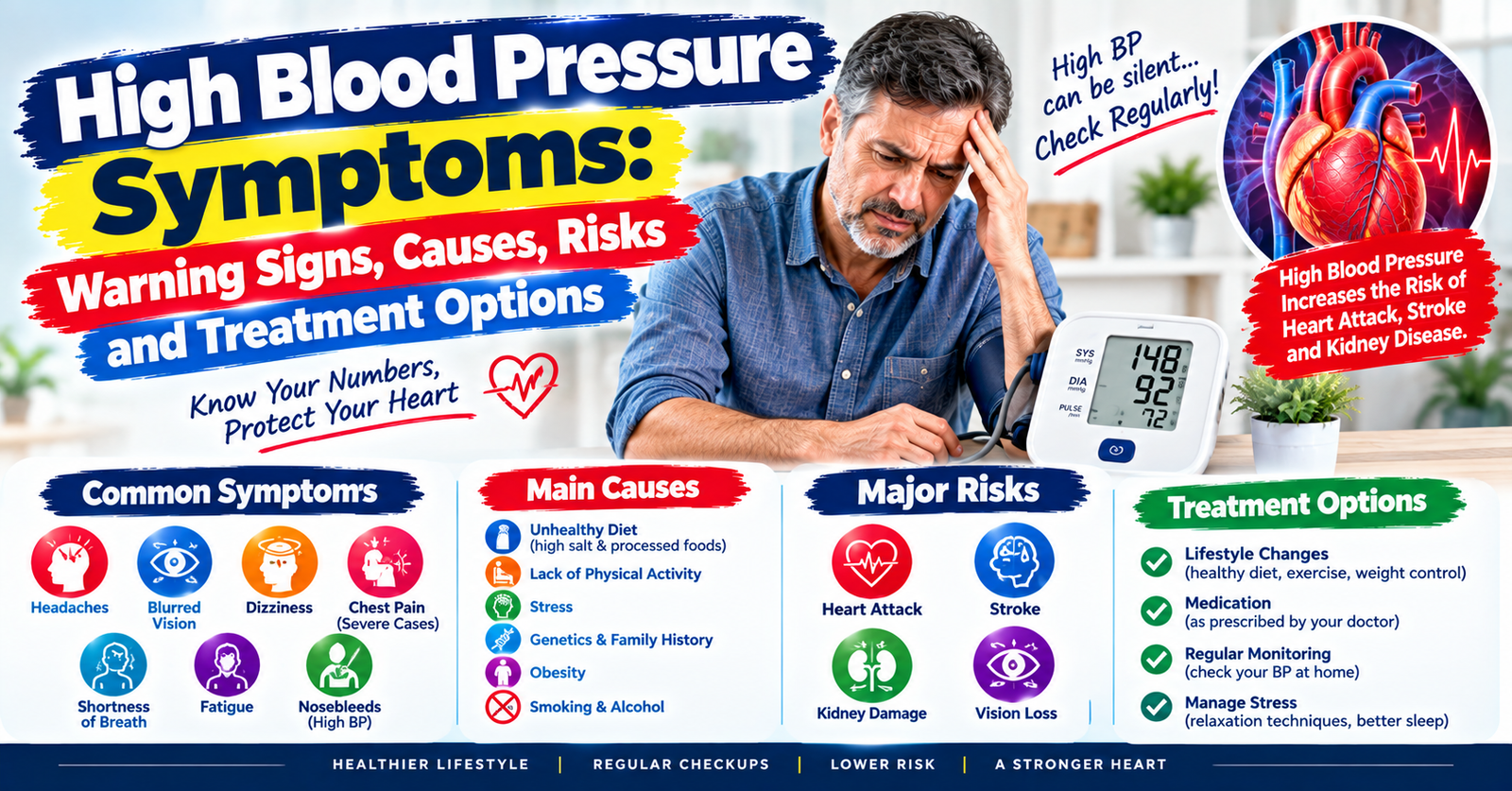
High Blood Pressure Symptoms: Warning Signs, Causes, Risks and Treatment Options
Emergency: If your blood pressure is 180/120 or higher and you have chest pain, shortness of breath, severe headache, confusion, vision changes, weakness or trouble speaking, call 911 (US) or 999 (UK) immediately.
High blood pressure, or hypertension, is one of the most common health conditions in the world, and one of the easiest to miss. Most people feel perfectly fine while it quietly damages their heart, brain, kidneys and eyes. This guide explains what symptoms to look for (and why their absence proves nothing), what causes high blood pressure, how it is diagnosed in the US and UK, the risks if it is left untreated, and the treatment options available.
What Is High Blood Pressure?
Blood pressure measures the force of blood pushing against your artery walls. It is written as two numbers: systolic (the pressure when the heart beats) over diastolic (the pressure between beats), measured in mm Hg. Hypertension means that pressure is consistently too high, which forces the heart to work harder and gradually damages blood vessels.
Does High Blood Pressure Have Symptoms?
Usually, no. The British Heart Foundation states plainly that high blood pressure usually has no symptoms, which is why most people do not know they have it. That is why it is often called a “silent” condition. You cannot reliably feel your blood pressure, so you cannot judge it by how you feel.
In rare cases, especially when pressure is very high, people may notice:
- Headaches
- Blurred vision or other vision changes
- Nosebleeds
- Dizziness
- Shortness of breath
- Chest pain
- Heart palpitations
- Anxiety
These symptoms are not specific to high blood pressure and can have many other causes. Headaches linked to hypertension tend to appear only when blood pressure is severely elevated. Never wait for symptoms before getting your blood pressure checked, and never assume you are fine because you feel well.
Warning Signs of a Hypertensive Crisis
A reading of 180/120 mm Hg or higher is considered a hypertensive crisis. Doctors distinguish two situations:
- Severe hypertension (urgency): Very high readings without signs of organ damage. Sit quietly for about five minutes and retake the reading. If it is still that high, contact your doctor urgently (same day), since your medication may need adjusting.
- Hypertensive emergency: Very high readings with signs of organ damage, such as chest pain, shortness of breath, severe headache, confusion, vision changes, numbness or weakness, or difficulty speaking. This needs emergency care. Call 911 or 999, and do not drive yourself.
What Counts as High Blood Pressure? US vs UK
Definitions differ slightly between countries.
United States (2025 AHA/ACC guideline):
| Category | Systolic | Diastolic |
| Normal | Below 120 | and below 80 |
| Elevated | 120–129 | and below 80 |
| Stage 1 hypertension | 130–139 | or 80–89 |
| Stage 2 hypertension | 140 or higher | or 90 or higher |
United Kingdom (NHS): High blood pressure is generally diagnosed when readings are consistently 140/90 mm Hg or higher in a clinic, or 135/85 mm Hg or higher as a home or ambulatory average. A single high reading does not confirm a diagnosis, because blood pressure varies during the day with activity and stress.
Because the two systems use different thresholds, always follow the targets your own doctor sets for you.
What Causes High Blood Pressure?
Primary (essential) hypertension is the most common type and develops gradually with no single cause. Factors include:
- Increasing age
- Family history and genetics
- A diet high in salt and low in potassium
- Overweight or obesity
- Physical inactivity
- Heavy alcohol use
- Chronic stress
- Smoking and poor sleep
Some groups, including people of Black African and South Asian descent, are at higher risk.
Secondary hypertension is caused by another condition or substance. Examples include kidney disease, hormonal disorders such as primary aldosteronism, sleep apnea, thyroid problems, pregnancy-related conditions, and certain medicines or substances (for example, some decongestants, anti-inflammatory painkillers, stimulants and oral contraceptives). Doctors look for secondary causes particularly in younger patients, in those with very high readings, and when blood pressure is hard to control.
Health Risks of Untreated High Blood Pressure
Over time, persistently high pressure can lead to:
- Heart attack and heart failure
- Stroke
- Kidney disease or kidney failure
- Vision loss from damage to the retina
- Aneurysms and narrowed arteries in the legs
- Cognitive decline and dementia. The 2025 AHA/ACC guideline specifically highlights keeping systolic pressure below 130 to help reduce this risk.
The good news is that lowering blood pressure substantially reduces these risks.
How Is High Blood Pressure Diagnosed?
Diagnosis needs repeated measurements, not one reading. Your doctor may use clinic readings, a home blood pressure monitor, or 24-hour ambulatory monitoring, which helps detect “white coat” hypertension (high only in clinics) and “masked” hypertension (normal in clinics but high at home). Basic tests may include blood and urine tests, an ECG and sometimes checks for secondary causes.
Tips for accurate home readings:
- Sit quietly for five minutes, back supported, feet flat, arm resting at heart level.
- Use a validated monitor with the correct cuff size.
- Avoid caffeine, smoking and exercise for 30 minutes beforehand.
- Take two readings a minute apart, morning and evening, for several days, and share the log with your doctor.
Treatment Options
Lifestyle changes are the foundation for everyone:
- Reach and maintain a healthy weight (losing even 5 percent of body weight can help)
- Follow a heart-healthy eating pattern such as the DASH diet
- Reduce sodium and increase potassium-rich foods, unless your doctor advises otherwise
- Be physically active on most days
- Limit or avoid alcohol
- Quit smoking and manage stress and sleep
Medication is added when lifestyle changes are not enough or when risk is high. According to the 2025 AHA/ACC guideline, the goal for most adults is below 130/80. Medication is recommended for readings of 140/90 or higher, and for selected adults with readings of 130/80 or higher who have cardiovascular disease, stroke, diabetes, chronic kidney disease or higher predicted cardiovascular risk. Lower-risk adults with stage 1 hypertension are advised to try three to six months of lifestyle changes first, and to start medication if pressure stays at or above 130/80.
First-line drug classes include thiazide-type diuretics, calcium channel blockers, and ACE inhibitors or ARBs. For stage 2 hypertension, the guideline recommends starting with two medicines from different classes, preferably combined in a single pill. Stubborn cases (“resistant hypertension”) may need additional drugs, and some carefully selected patients may be considered for procedures such as renal denervation. The guideline also suggests that newer weight-loss medications may be considered for some patients with overweight or obesity.
Never start, change or stop blood pressure medicine without talking to your doctor. Stopping suddenly can be dangerous.
High Blood Pressure in Pregnancy
High blood pressure in pregnancy needs close monitoring. Seek urgent medical advice if you have severe headache, vision changes, sudden swelling or upper abdominal pain during pregnancy, as these can be signs of preeclampsia.
When to See a Doctor
- Get your blood pressure checked at least every year if you are an adult, and more often if it is high or you have risk factors.
- In England, the free NHS Health Check is offered to adults aged 40 to 74.
- See a doctor promptly if home readings are consistently high, or if you have a family history, diabetes or kidney disease.
- Call 911 or 999 for a reading of 180/120 or higher with symptoms.
Frequently Asked Questions
Q: What are the symptoms of high blood pressure? Usually none. Rarely, very high pressure causes headaches, nosebleeds, blurred vision or dizziness.
Q: What blood pressure is dangerous? A reading of 180/120 or higher is a hypertensive crisis. With symptoms, it is an emergency.
Q: Can high blood pressure be cured? It can usually be controlled, and sometimes reversed with lifestyle changes. Many people need long-term treatment.
Q: Can stress cause high blood pressure? Stress can raise pressure temporarily, and long-term stress and unhealthy coping habits can contribute to hypertension.
Q: How often should I check my blood pressure? At least annually, and more often if advised by your doctor.
Medical disclaimer: This article is for general information only and is not a substitute for professional medical advice, diagnosis or treatment. If you think you are having a medical emergency, call your local emergency number.