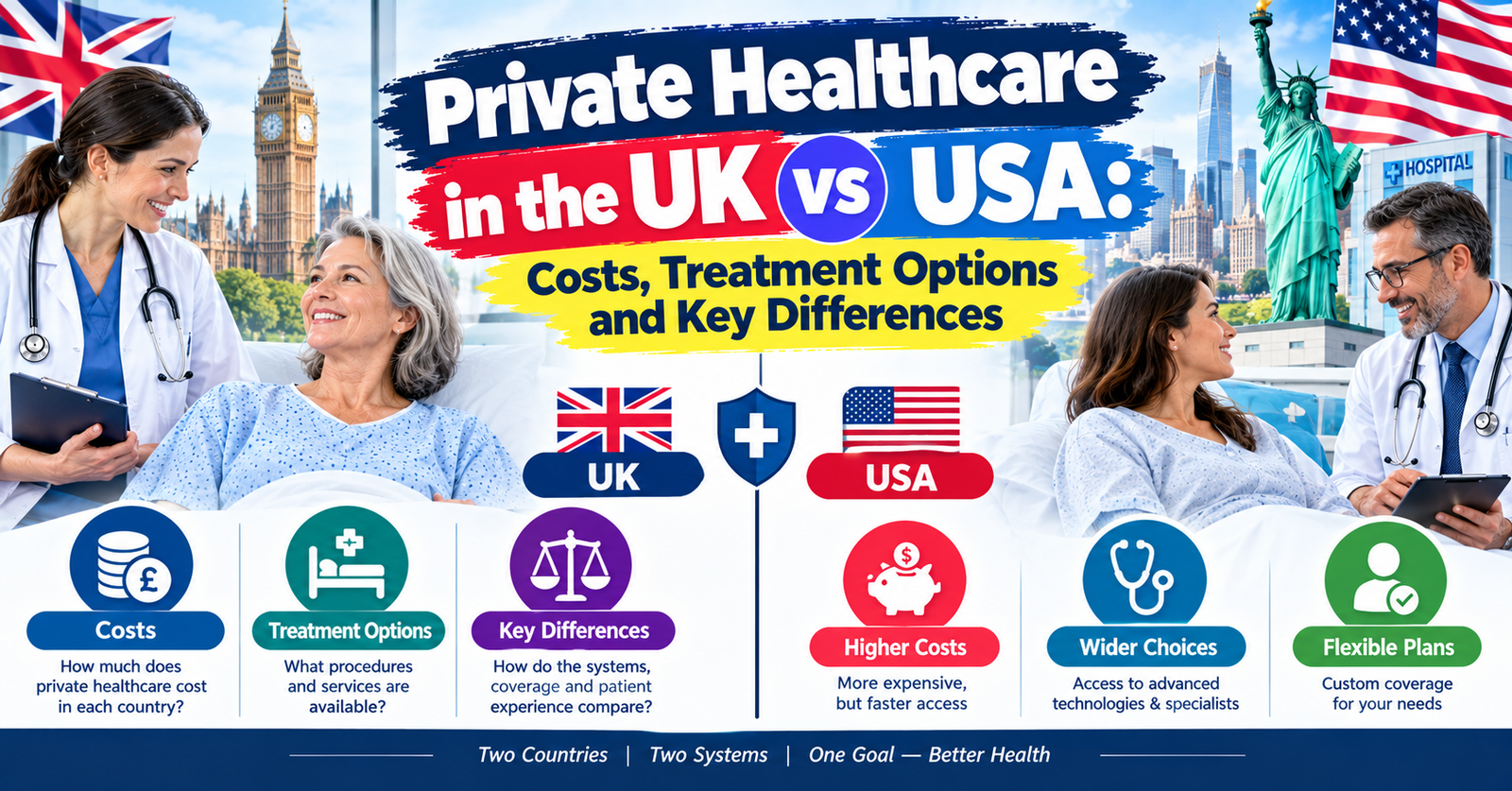
Private Healthcare in the UK vs USA: Costs, Treatment Options and Key Differences
“Private healthcare” means very different things on either side of the Atlantic. In the United States, it is the backbone of the system, where most working-age people get coverage through private insurance. In the UK, it is an optional layer on top of the NHS, used to skip waiting lists or choose a surgeon.
Understanding these differences matters whether you are moving countries, comparing treatment costs, or simply trying to make sense of your own coverage. This guide explains how each system works, what it costs, and where the real trade-offs lie.
How the Two Systems Are Built
In the UK, the NHS provides care that is free at the point of use, funded through general taxation. Private healthcare sits alongside it. People buy private medical insurance (PMI) or pay out of pocket when they want faster access, a named consultant or a private room.
In the US, there is no single national health service. Coverage comes from a patchwork: employer-sponsored insurance, ACA marketplace plans, government programs like Medicare (mainly for people 65 and over) and Medicaid (for eligible low-income people), and, for some, no coverage at all. About 8 percent of Americans, roughly 27 million people, are uninsured, and around a quarter have coverage with high out-of-pocket costs or deductibles. Research shows that Americans are far more likely than people in peer countries to skip needed care because of cost.
The spending gap is striking. The US spends about 18 percent of its GDP on health care, nearly twice the OECD average, and its per-person spending is about 1.5 times that of the next-highest country.
What Health Insurance Costs in the US
For most Americans, insurance costs are split between employer and worker. In 2025, average annual premiums for employer coverage were $9,325 for single coverage and $26,993 for family coverage. Workers paid an average of 16 percent of single premiums and 26 percent of family premiums, about $1,440 and $6,850 per year respectively.
The premium is only part of the picture. The average deductible for single coverage was $1,886, and 34 percent of covered workers had a deductible of $2,000 or more. That means you often pay thousands of dollars in medical bills before insurance begins to share the cost, then coinsurance on top, up to your plan’s out-of-pocket maximum.
What Private Medical Insurance Costs in the UK
UK PMI is much cheaper on paper because it is supplemental. A March 2026 sample of quotes from seven insurers found the average individual policy cost about £82.53 per month (around £990 per year), a couple about £158 per month and a family of four about £181 per month. Other analyses put a comprehensive individual policy at roughly £80 to £105 per month, with costs rising steeply with age, and private medical inflation running at around 8 to 12 percent a year.
Roughly 12 percent of the UK population is estimated to be covered by private medical insurance, often through employer schemes, although figures vary by source. Healthwatch England reported that the use of private healthcare rose from 9 percent in 2024 to 16 percent by March 2026.
What PMI typically covers: acute conditions that respond quickly to treatment, elective surgery and diagnostic tests. What it usually does not cover: long-term chronic conditions, pre-existing conditions (depending on underwriting), and emergency care, which remains with the NHS.
Why Are People in the UK Going Private?
Mostly because of waiting times. NHS England’s waiting list stood at about 7.2 to 7.3 million pathways in spring and summer 2026, with about 2.5 million patients waiting more than 18 weeks and around 110,000 waiting over a year by July 2026. Waits vary enormously by specialty and region, and some procedures are much faster than others, so check your local trust’s data.
Treatment Costs: UK vs US Side by Side
Here is how typical self-pay (no insurance) prices compare for common procedures, drawn from 2026 pricing guides:
| Procedure | USA (before insurance) | UK (private self-pay) |
| Hip replacement | $25,000–$75,000 | £11,000–£17,000 |
| Knee replacement | $30,000–$70,000 | £10,000–£17,500 |
| Cataract surgery (per eye) | $3,000–$6,000 | £2,000–£4,500 |
| Angioplasty with stent | $15,000–$50,000 | £7,000–£15,000 |
| Heart bypass (CABG) | $70,000–$200,000 | £12,000–£25,000 |
| IVF cycle (incl. medication) | $20,000–$30,000 | About £5,000–£10,000 |
Two cautions apply. First, US figures are usually list (billed) prices, while insured patients pay far less. A knee replacement billed at $50,000 might cost an insured patient a few thousand dollars. Second, UK private prices are often quote-based, and consultations, scans and medications may be billed separately. See our individual guides on each procedure for details.
Key Differences at a Glance
| UK | USA | |
| Main system | NHS (tax-funded) plus optional private | Private insurance plus Medicare/Medicaid |
| Who is covered | All eligible residents via NHS | About 92% insured; about 8% uninsured |
| Typical private premium | About £80–£105/month (individual) | About $9,300/year (single, employer average) |
| Cost at point of care | Free on NHS | Deductibles, copays, coinsurance |
| Main complaint | Waiting times | Bills, billing complexity, coverage gaps |
| Emergency care | Free on NHS | Treated regardless, but bills can follow |
| Choice of doctor/hospital | Limited on NHS; wide if private | Depends on insurer’s network |
Other Practical Differences
Prescriptions: In England, prescriptions carried a charge of £9.90 per item as of 2025, with many exemptions (for example, cancer-related prescriptions), while Scotland, Wales and Northern Ireland provide free prescriptions. In the US, drug costs depend on your plan’s formulary tiers and deductible.
Primary care: NHS GP visits are free, but appointment availability can be a frustration. In the US, you usually pay a copay or the full negotiated rate until your deductible is met.
Specialist access: The US generally offers faster access to specialists for insured patients, while the NHS uses a referral system with longer waits for non-urgent care.
Administrative burden: US patients deal with prior authorizations, network restrictions and multiple bills (hospital, surgeon, anesthesia). UK private patients typically receive package prices, which are simpler but can exclude extras.
Which System Is “Better”?
There is no simple answer, and it depends on what you value. The NHS offers universal access and protection from medical bankruptcy, but can mean long waits for non-urgent treatment. The US system offers fast access and wide choice for people with good insurance, but costs are higher and coverage gaps leave millions exposed. Both systems produce excellent outcomes in many areas, and both face funding and capacity pressures. Reasonable people disagree about trade-offs, so it is worth looking at the data for the specific service you need.
Practical Tips If You Are Comparing or Moving Between Systems
- Moving to the US: Enroll in coverage as soon as you are eligible, understand your deductible and out-of-pocket maximum, and always check that providers are in-network.
- Moving to the UK: Check your eligibility for NHS care and any immigration health surcharge. Consider PMI only if you want faster access, and read the exclusions.
- Buying PMI in the UK: Compare excess levels, hospital lists and whether outpatient care is included. Ask how pre-existing conditions are treated.
- Medical tourism or cross-border care: Get itemized written quotes, and check what follow-up care is included.
Frequently Asked Questions
Q: Is private healthcare cheaper in the UK than the US? Generally yes for both insurance premiums and self-pay procedures, although prices and coverage vary widely.
Q: Do UK residents need private insurance? No. NHS care is free at the point of use, and private insurance is optional.
Q: What percentage of Americans are uninsured? About 8 percent, or roughly 27 million people.
Q: Can I use the NHS and go private too? Yes. You can pay privately for some care and stay on the NHS list.
Q: Does UK private insurance cover pre-existing conditions? Usually not, although terms depend on the insurer and underwriting method.
Disclaimer: This article is for general information only and is not medical, legal or financial advice. Insurance costs and waiting times change, so verify current details with insurers, providers and official sources.