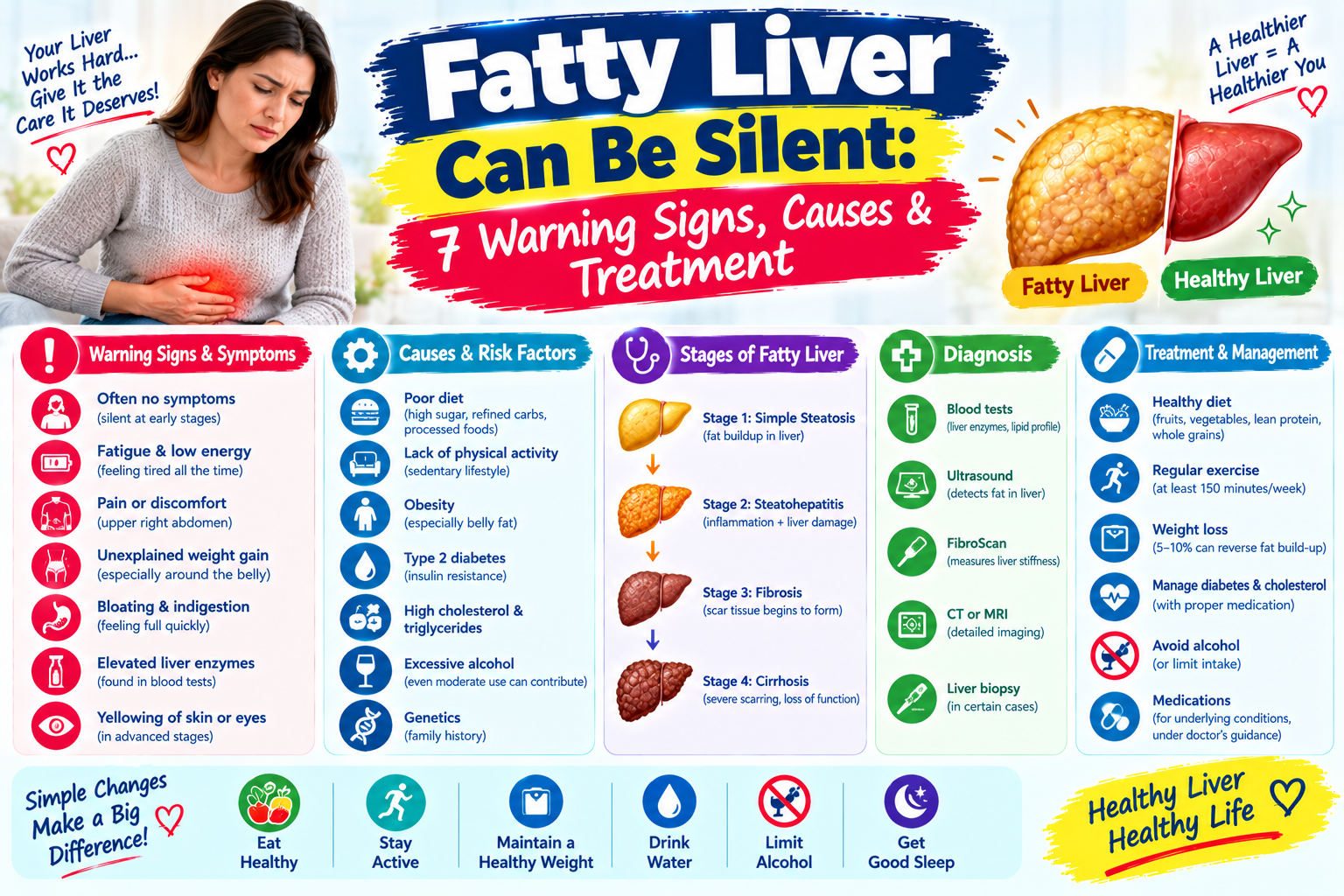
Fatty Liver Symptoms and Treatment: Causes, Stages, Diagnosis and Lifestyle Management
A lot of people first hear the words “fatty liver” in an unexpected way: a routine ultrasound ordered for something unrelated, or a blood test showing slightly high liver enzymes that nobody can explain. There’s no pain, no warning, and often no reason to think anything is wrong.
That silence is the problem. Fatty liver disease is now the most common chronic liver condition in the world. Research reviews describe metabolic dysfunction-associated steatotic liver disease (MASLD) as affecting roughly 38% of adults globally. Left unchecked in some people, it can progress to inflammation, scarring and, eventually, cirrhosis or liver cancer.
The reassuring part is that the early stages are often reversible. This guide covers the symptoms, causes, stages, diagnosis and the practical lifestyle changes and treatments that make a difference.
What Is Fatty Liver Disease?
Fatty liver, medically called hepatic steatosis, means excess fat has built up in liver cells. A small amount of fat in the liver is normal. When fat makes up more than about 5% of the liver’s weight, it’s considered fatty liver.
You may also see these terms, which is worth knowing because the names changed:
- MASLD (metabolic dysfunction-associated steatotic liver disease): the new name, adopted through an international consensus in 2023, for what used to be called NAFLD (nonalcoholic fatty liver disease). It describes fatty liver in people who also have metabolic risk factors such as obesity, type 2 diabetes, high blood pressure or abnormal cholesterol.
- MASH (metabolic dysfunction-associated steatohepatitis): the more serious form, formerly called NASH. Here the liver has fat plus inflammation and cell injury, which can lead to scarring.
- MetALD: a newer category for people with metabolic risk factors who also drink more alcohol than the MASLD threshold allows.
- ALD (alcohol-related liver disease): fatty liver driven mainly by heavy alcohol use.
If you search for NAFLD or NASH, you’re looking at the same conditions under the older names.
Fatty Liver Symptoms
Here’s the honest truth: most people with early fatty liver feel completely normal. When symptoms do appear, they’re often vague and easy to blame on something else:
- Fatigue or low energy
- A dull ache or sense of fullness in the upper right abdomen, under the ribs
- Mild unexplained weight loss or reduced appetite
- Weakness
- Brain fog
Signs of more advanced liver damage (cirrhosis) are more noticeable:
- Yellowing of the skin and eyes (jaundice)
- Swelling in the legs and abdomen (fluid retention or ascites)
- Itchy skin
- Easy bruising or bleeding
- Dark urine and pale stools
- Spider-like blood vessels on the skin
- Confusion or sleepiness from toxin buildup (hepatic encephalopathy)
- Vomiting blood or black, tarry stools
Because early disease is silent, fatty liver is frequently discovered by accident, which is why knowing your risk factors matters.
What Causes Fatty Liver?
Fatty liver builds up when the liver takes in or makes more fat than it can use or export. The most common drivers include:
Insulin resistance and metabolic syndrome. This is the central mechanism for MASLD. When cells respond poorly to insulin, more fat is released from body fat stores and the liver also makes more fat on its own.
Excess body weight. Particularly fat around the abdomen (visceral fat).
Type 2 diabetes and prediabetes. In one study of adults aged 50 and older with type 2 diabetes, about 70% had MASLD, and roughly 14% had at-risk MASH.
High cholesterol and triglycerides.
Diet. Diets high in added sugar (especially fructose from sugary drinks), refined carbohydrates and ultra-processed foods contribute.
Heavy alcohol use. Alcohol damages the liver directly and can cause alcohol-related fatty liver even in people with few other risk factors.
Rapid weight loss, certain medications, and other conditions. These include some steroids and chemotherapy drugs, hepatitis C, polycystic ovary syndrome (PCOS), hypothyroidism and sleep apnea.
Genetics. Variants in genes such as PNPLA3 influence how likely you are to store liver fat and develop scarring.
Can You Have Fatty Liver Without Being Overweight?
Yes. This is sometimes called “lean” fatty liver. In a national U.S. analysis of lean adults from 2017 to 2023, the age-adjusted prevalence of lean steatotic liver disease was 12.8%, including 9.3% for lean MASLD. Genetics, ethnicity, visceral fat and diet quality can all play a role, which is why a normal weight doesn’t rule it out.
The Stages of Fatty Liver Disease
Fatty liver develops along a spectrum. Not everyone moves through every stage, and progression can take years.
Stage 1: Simple fatty liver (steatosis). Fat accumulates with little or no inflammation. Most people stay at this stage and have a low risk of serious complications, especially if they address risk factors.
Stage 2: Steatohepatitis (MASH). Fat plus inflammation and liver cell damage. This is where the liver starts to be at real risk.
Stage 3: Fibrosis. Ongoing inflammation leads to scar tissue. Fibrosis is graded from F0 (none) to F4 (cirrhosis). Moderate to advanced fibrosis (F2 to F3) is a key point where treatment becomes more intensive.
Stage 4: Cirrhosis. Extensive scarring distorts the liver and impairs function. This can lead to liver failure, portal hypertension and an increased risk of liver cancer. Some damage at this stage is permanent, though stopping further injury remains crucial.
It’s also important to know that people with MASLD are at higher risk for heart disease. In fact, cardiovascular disease is the leading cause of death in people with MASLD, ahead of liver-related causes. Caring for your liver means caring for your heart as well.
How Fatty Liver Is Diagnosed
Because symptoms are rare, diagnosis relies on tests:
- Blood tests. Liver enzymes (ALT and AST) may be elevated, though they can also be normal in people with fatty liver. Doctors may also check blood sugar or A1C, cholesterol and triglycerides, and rule out other liver conditions such as viral hepatitis.
- FIB-4 score. A simple calculation using age, AST, ALT and platelet count to estimate the risk of significant fibrosis. It’s often used in primary care as a first screen.
- Ultrasound. A common, non-invasive way to see fat in the liver, though it’s less sensitive for small amounts of fat.
- Elastography (FibroScan or MR elastography). Measures liver stiffness, which indicates scarring. It’s a key tool for staging fibrosis without a biopsy.
- MRI-PDFF. A precise imaging method for measuring liver fat, used mostly in specialized settings and research.
- Liver biopsy. A small sample of liver tissue is examined under a microscope. It’s reserved for cases where the diagnosis is unclear or the stage affects treatment decisions.
Guidelines increasingly recommend screening for liver fibrosis in people with type 2 diabetes, obesity with metabolic risk factors, or unexplained elevated liver enzymes.
Fatty Liver Treatment and Lifestyle Management
For most people, lifestyle change is the cornerstone of treatment, and it works. In the early stages, fat in the liver can decrease significantly and even resolve.
1. Weight Loss
Weight loss is the best-studied treatment for fatty liver. Research generally shows that losing around 5% of body weight can reduce liver fat, around 7% to 10% can improve inflammation, and 10% or more may help reverse early scarring in some people. Gradual loss is better than crash diets, since rapid weight loss can sometimes worsen liver inflammation.
2. Eat for Your Liver
- Follow a Mediterranean-style diet rich in vegetables, fruits, legumes, whole grains, nuts, olive oil and fish. Studies link high adherence to lower liver-related risk.
- Cut sugary drinks such as soda, sweetened tea and fruit juices, since fructose is strongly tied to liver fat.
- Limit refined carbs and ultra-processed foods, such as white bread, pastries and packaged snacks.
- Choose unsaturated fats over saturated and trans fats.
- Include fiber from beans, oats, vegetables and fruit.
- Some evidence suggests coffee consumption is associated with lower risk of liver fibrosis, though it’s not a treatment on its own.
3. Exercise
Both aerobic and resistance exercise lower liver fat, even without significant weight loss. A common target is at least 150 minutes of moderate activity a week plus two sessions of strength training. Research suggests higher physical activity levels and better diet quality are linked to lower risk of MASLD and advanced liver disease.
4. Limit or Avoid Alcohol
Alcohol adds to liver injury. Many specialists advise people with MASLD, especially those with fibrosis, to limit alcohol significantly or avoid it entirely. Your doctor can advise what’s right for you.
5. Manage Related Conditions
Controlling blood sugar, blood pressure and cholesterol protects both the liver and the heart. Treating sleep apnea and thyroid disorders can also help.
6. Medications
Until recently, there were no medications approved specifically for fatty liver. That changed in 2024 when resmetirom became the first FDA-approved medication for adults with noncirrhotic MASH and moderate-to-advanced fibrosis (stages F2 to F3), used alongside diet and exercise. One analysis estimated that roughly 8.4 million U.S. adults may meet eligibility criteria, though the number depends on how strictly criteria are applied.
Other medications may be used to treat related conditions and sometimes benefit the liver too. For example, in people with MASLD and type 2 diabetes, one analysis linked GLP-1 receptor agonist use to a lower relative risk of major adverse liver outcomes compared with SGLT2 inhibitors. Treatment decisions are individual, so this is a conversation for your doctor or a hepatologist.
7. Bariatric Surgery
For people with severe obesity, weight-loss surgery can lead to meaningful improvement in liver fat and inflammation, and in some cases fibrosis. It’s usually considered when other efforts haven’t been enough.
8. Advanced Disease
People with cirrhosis need ongoing monitoring, including screening for liver cancer and for varices (enlarged veins in the esophagus). In advanced or end-stage cases, liver transplantation may be an option.
What About Supplements and “Liver Detox” Products?
Be cautious. There’s no proven “liver cleanse,” and some herbal and dietary supplements can actually harm the liver. Talk to your doctor before taking anything new, including vitamins at high doses.
Can Fatty Liver Be Reversed?
In many cases, yes, particularly in the early stages. Simple steatosis and early MASH often improve substantially with weight loss, healthier eating, regular activity and better control of blood sugar. Even some early fibrosis can regress. Advanced scarring is harder to reverse, but stopping further damage still improves outcomes. That’s the best argument for catching it early.
When to See a Doctor
Talk to your doctor about screening if you have type 2 diabetes or prediabetes, obesity, high blood pressure, abnormal cholesterol, PCOS, sleep apnea, a family history of liver disease, or elevated liver enzymes on a blood test. Don’t wait for symptoms.
Seek prompt medical care if you notice yellowing of the skin or eyes, abdominal or leg swelling, vomiting blood, black stools, confusion or extreme drowsiness, as these can signal advanced liver disease or a serious complication.
Key Takeaways
Fatty liver is common, usually silent and often reversible when found early. The condition’s new names (MASLD and MASH) reflect what drives it: metabolic health. Gradual weight loss, a Mediterranean-style diet, regular exercise, limiting alcohol and managing diabetes and cholesterol are the foundation of treatment, with new medication options now available for selected patients with significant fibrosis. If you have risk factors, ask your doctor about a simple screening test.
Disclaimer: This article is for general information only and isn’t a substitute for professional medical advice, diagnosis or treatment. Always consult a qualified healthcare provider about your liver health.
Sources to link when publishing: NIDDK (NIH) Fatty Liver Disease information; American Association for the Study of Liver Diseases (AASLD) guidance; American Liver Foundation; FDA announcement on resmetirom.