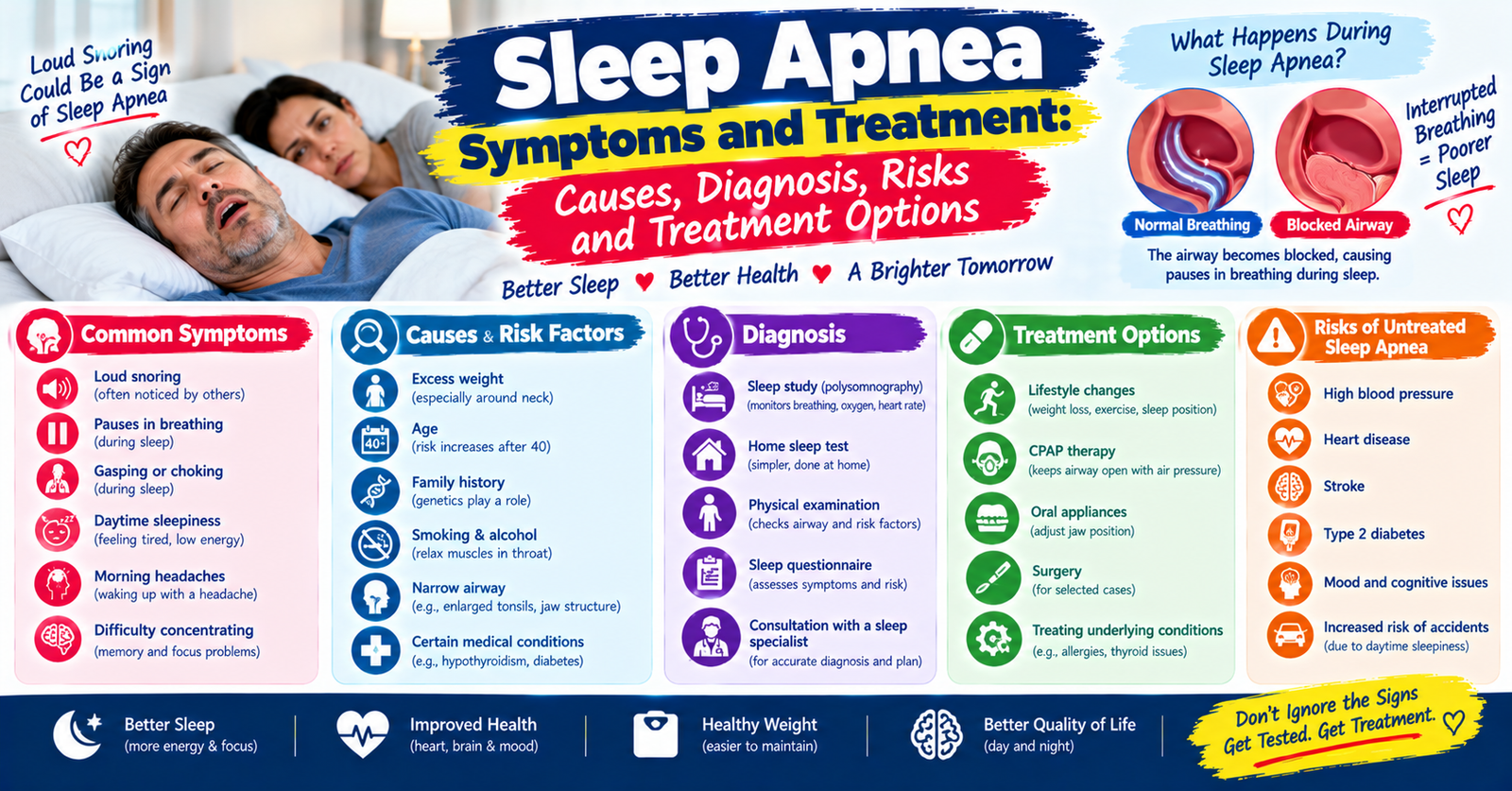
Sleep Apnea Symptoms and Treatment: Causes, Diagnosis, Risks and Treatment Options
Plenty of people have a partner who tells them they snore. Far fewer realize that a certain kind of snoring, the loud kind punctuated by silent pauses and sudden gasps, can be a sign of a condition that quietly strains the heart, the brain and the metabolism night after night.
That condition is sleep apnea, and most people who have it don’t know. The American Academy of Sleep Medicine (AASM) estimates that nearly 30 million U.S. adults have obstructive sleep apnea, with about 23.5 million of those cases undiagnosed. A 2025 study using a broader set of criteria and adjusting for obesity put the estimate far higher, at roughly 83.7 million adults, which shows how much the true number depends on how the condition is defined and measured. Either way, the pattern is the same: it’s common, and it’s missed.
This guide explains the symptoms, causes, how sleep apnea is diagnosed, what it does to your health when untreated, and the treatment options available today.
What Is Sleep Apnea?
Sleep apnea is a sleep disorder in which breathing repeatedly stops and starts during sleep. These pauses, called apneas (complete stops) or hypopneas (partial reductions in airflow), can happen dozens or even hundreds of times a night. Each one briefly drops oxygen levels and jolts the brain into a lighter stage of sleep to restart breathing, often without you remembering.
There are three main types:
- Obstructive sleep apnea (OSA): The most common form. The muscles of the throat relax too much and the airway narrows or collapses.
- Central sleep apnea (CSA): The brain doesn’t send proper signals to the muscles that control breathing. The airway isn’t blocked. The “go” signal is the problem.
- Complex (mixed) sleep apnea: A combination of the two, sometimes emerging during treatment for OSA.
Common Symptoms of Sleep Apnea
Many symptoms show up at night, but the daytime effects are often what bring people in.
Nighttime signs:
- Loud, chronic snoring (though not everyone with sleep apnea snores, and not everyone who snores has apnea)
- Pauses in breathing noticed by a bed partner
- Choking, gasping or snorting during sleep
- Restless sleep and frequent position changes
- Waking up with a dry mouth or sore throat
- Frequent urination at night
- Night sweats
- Waking up suddenly short of breath
Daytime signs:
- Excessive sleepiness, even after what seemed like a full night
- Morning headaches
- Trouble concentrating or memory lapses
- Irritability, low mood or anxiety
- Falling asleep while reading, watching TV or, dangerously, driving
- Reduced sex drive
AASM notes that snoring combined with choking, gasping or silent breathing pauses during sleep is a reliable indicator of sleep apnea. It also points out that between 30 and 40 percent of adults with high blood pressure also have sleep apnea.
Do Women Have Different Symptoms?
Often, yes. Women are less likely to report the stereotypical loud snoring and breathing pauses and more likely to describe insomnia, fatigue, morning headaches, depression or anxiety, which can lead to misdiagnosis. Sleep apnea risk in women also rises after menopause.
What Causes Sleep Apnea?
Anatomy and airway structure. A naturally narrow airway, large tonsils, a thick neck, a recessed jaw or a large tongue can all make collapse more likely.
Excess weight. Fat deposits around the upper airway and neck can narrow the passage. Weight is one of the strongest modifiable risk factors, but it’s important to note that people of any size can have sleep apnea.
Aging. Muscle tone in the throat declines with age.
Nasal congestion. Chronic stuffiness or a deviated septum can contribute.
Alcohol and sedatives. These relax throat muscles further and can worsen breathing pauses.
Smoking. It causes inflammation and fluid retention in the airway.
Medical conditions. Heart failure, atrial fibrillation, type 2 diabetes, high blood pressure, polycystic ovary syndrome (PCOS), hypothyroidism and neurological conditions are linked to sleep apnea. Central sleep apnea, in particular, is often associated with heart failure, stroke or opioid use.
Who Is at Higher Risk?
You’re more likely to have sleep apnea if you are older, male, postmenopausal, carrying extra weight, have a family history, smoke or drink heavily, or have a large neck circumference. Certain ethnic groups also appear to have higher rates. Anyone with high blood pressure that’s hard to control, an irregular heart rhythm or type 2 diabetes should be considered at higher risk too.
Health Risks of Untreated Sleep Apnea
Sleep apnea isn’t just about being tired. Repeated drops in oxygen and constant sleep fragmentation put stress on the whole body. Untreated, it’s associated with:
- High blood pressure and difficult-to-control hypertension
- Heart disease, including heart attack, heart failure and atrial fibrillation
- Stroke
- Type 2 diabetes and insulin resistance
- Depression and anxiety
- Memory and attention problems
- Liver problems such as fatty liver disease
- Drowsy driving and workplace accidents
- Complications with surgery or anesthesia
The encouraging flip side is that treating sleep apnea can improve sleep quality, daytime energy, mood and, in many people, blood pressure control.
How Sleep Apnea Is Diagnosed
Diagnosis usually starts with a conversation about your sleep, a physical exam of your mouth, throat and neck, and a screening questionnaire such as the STOP-Bang or Epworth Sleepiness Scale. If sleep apnea is suspected, you’ll typically have one of two tests:
Home sleep apnea test (HSAT). A simplified device you wear at home for one or more nights that measures breathing, oxygen levels and heart rate. It’s convenient and commonly used for people who are likely to have uncomplicated obstructive sleep apnea.
In-lab polysomnography. An overnight study at a sleep center, with sensors tracking brain waves, eye movements, muscle activity, breathing, oxygen and heart rhythm. It’s more detailed and is generally used for more complex cases, suspected central sleep apnea or when a home test isn’t conclusive.
Results are reported as the apnea-hypopnea index (AHI), the number of breathing events per hour of sleep. Roughly, 5 to 14 events per hour is considered mild, 15 to 29 moderate, and 30 or more severe, though your doctor also weighs symptoms and other health conditions.
Sleep Apnea Treatment Options
The right treatment depends on the type and severity of your sleep apnea, your anatomy and your preferences. Here are the main options.
1. CPAP Therapy
Continuous positive airway pressure (CPAP) is the most widely used and effective treatment for moderate to severe obstructive sleep apnea. A machine delivers a steady flow of air through a mask, keeping the airway open during sleep. Many people notice better energy and sleep within days to weeks.
The main challenge is sticking with it. Mask discomfort, dryness, claustrophobia or air leaks are common reasons people stop. Often, the fix is simply a different mask, a humidifier, pressure adjustments or a bit of coaching, so don’t give up without talking to your sleep clinic. Variants like auto-adjusting (APAP) and bilevel (BiPAP) machines can help some people.
2. Oral Appliances
Custom-fitted mouthpieces, made by a dentist trained in sleep medicine, move the lower jaw or tongue forward to keep the airway open. They’re often an option for mild to moderate sleep apnea or for people who can’t tolerate CPAP. Possible side effects include jaw soreness and bite changes over time, so follow-up is important.
3. Lifestyle Changes
These are useful on their own for mild cases and as support for any other treatment:
- Weight loss. For people carrying excess weight, even a moderate reduction can improve or sometimes resolve symptoms.
- Positional therapy. Some people have more events when sleeping on their back, so side-sleeping may help.
- Avoiding alcohol and sedatives near bedtime
- Quitting smoking
- Treating nasal congestion
- Regular exercise, which can improve sleep apnea even without major weight loss
4. Hypoglossal Nerve Stimulation
For selected adults with moderate to severe obstructive sleep apnea who can’t use CPAP, an implanted device stimulates the nerve controlling tongue movement, keeping the airway open during sleep. Candidates are carefully screened, including an endoscopic evaluation of the airway.
5. Surgery
Surgical options aim to enlarge or stabilize the airway. They include removing tonsils and adenoids (especially effective in children), correcting nasal obstruction, uvulopalatopharyngoplasty (UPPP), and jaw advancement surgery. Results vary, so surgery is typically considered when other treatments have failed or when a specific anatomical cause is identified.
6. Weight-Loss Medications and Bariatric Surgery
For people with obesity-related sleep apnea, medical weight-loss treatments and bariatric surgery can substantially reduce severity. Ask your doctor whether this is appropriate for you, as treatment rules and approved medications continue to evolve.
7. Treatments for Central Sleep Apnea
Because the problem lies in breathing control, treatment focuses on the underlying cause, such as heart failure, along with options such as adaptive servo-ventilation (ASV) in selected patients, supplemental oxygen or phrenic nerve stimulation. Specialist guidance is essential here.
Tips for Better Sleep While Getting Treated
- Keep a regular sleep and wake schedule
- Avoid heavy meals, alcohol and caffeine late in the day
- Keep your bedroom cool, dark and quiet
- Clean your CPAP mask and tubing regularly as directed
- Bring your CPAP data or concerns to follow-up visits, since small adjustments can make a big difference
When to See a Doctor
Talk to your doctor if you snore loudly and often, if someone has seen you stop breathing during sleep, if you wake up gasping or choking, or if you feel unrefreshed and sleepy during the day despite spending enough time in bed. Be especially proactive if you have high blood pressure, heart rhythm problems, diabetes or a history of stroke.
Be careful about sleepiness while driving. If you’ve nodded off or nearly crashed because of drowsiness, get evaluated promptly and avoid driving when you feel sleepy.
Key Takeaways
Sleep apnea is common, serious and very treatable. Persistent loud snoring, gasping at night and daytime exhaustion aren’t things you have to live with. A sleep test is straightforward, and treatments like CPAP, oral appliances, lifestyle changes and newer options can improve how you sleep, feel and protect your long-term health.
Disclaimer: This article is for general information only and isn’t a substitute for professional medical advice, diagnosis or treatment. Always consult a qualified healthcare provider about your sleep and health concerns.
Sources to link when publishing: American Academy of Sleep Medicine (AASM) and SleepEducation.org; CDC sleep resources; NHLBI (NIH) sleep apnea information.