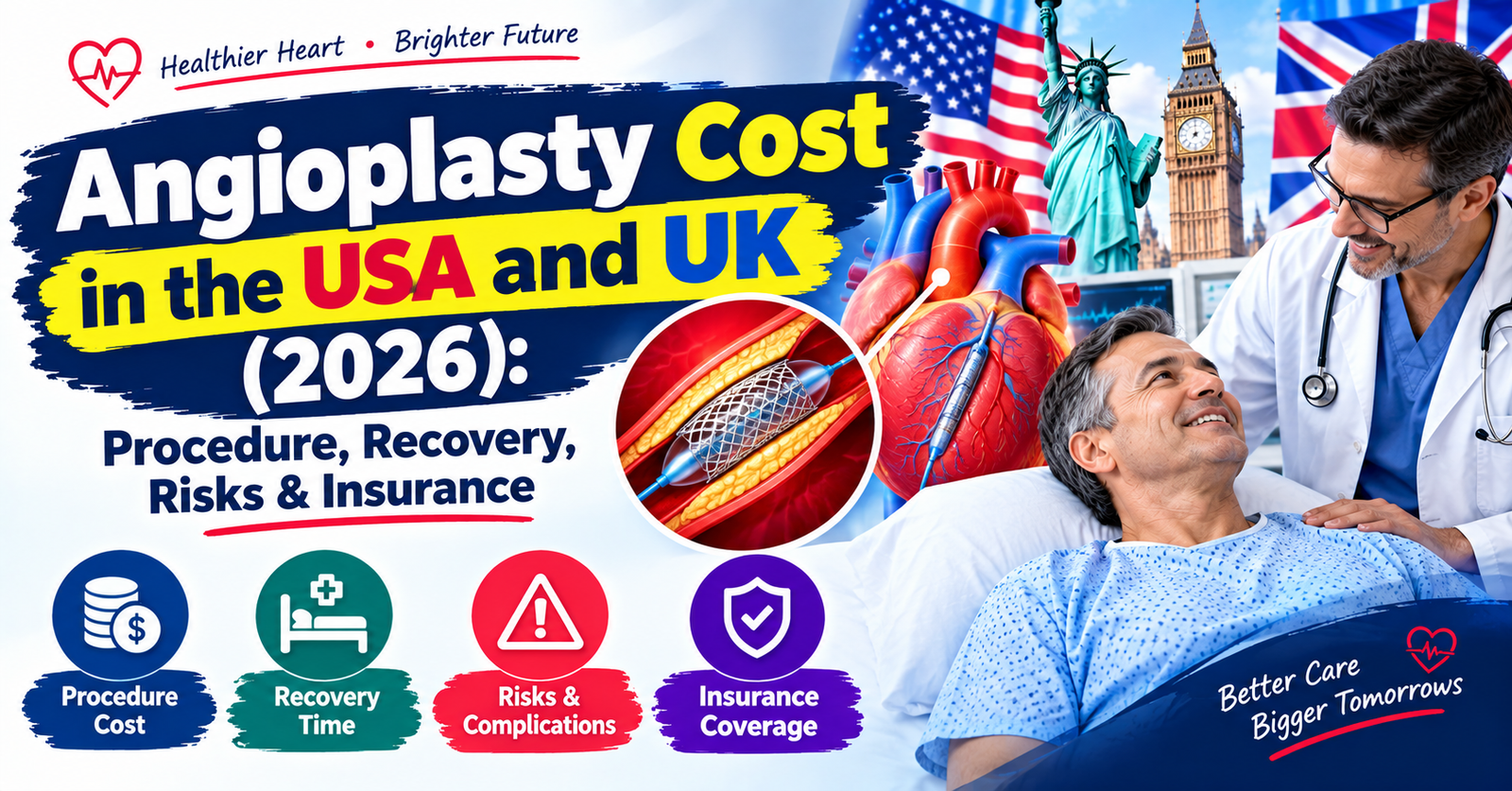
Angioplasty Cost in the USA and UK: Procedure, Recovery, Risks and Insurance
Angioplasty is one of the most common heart procedures in the world, and for many people it is a lifesaver. It is also a procedure where the final bill can surprise you. The difference between a $2,000 out-of-pocket cost and a $50,000 invoice often comes down to insurance status, hospital pricing and whether you need one stent or several.
This guide walks through what angioplasty costs in the US and UK, what happens during the procedure, how recovery works, the risks, and how to avoid unwelcome billing surprises.
What Is Angioplasty?
Coronary angioplasty, also called percutaneous coronary intervention (PCI), opens narrowed or blocked heart arteries. A cardiologist threads a thin catheter, usually through the wrist or groin, to the blockage, then inflates a tiny balloon to widen the artery. In most cases a stent, a small mesh tube, is left in place to keep the vessel open. Modern stents are usually drug-eluting, meaning they release medication that helps prevent the artery from narrowing again.
Doctors recommend angioplasty for people with angina that is hurting their quality of life, or after a heart attack. The procedure typically takes somewhere between half an hour and two hours.
Angioplasty Cost in the USA
US price guides vary widely, and that is a problem in itself. Depending on the source, total pre-insurance costs for angioplasty with a stent run from about $11,500 to $49,000, from $15,000 to $50,000, or from $20,000 to $60,000. Hospital chargemaster prices for a stent procedure are often cited at $20,000 to $60,000.
The bill is made up of several parts:
- Procedure fee: often $6,000 to $18,000 or more
- Stent(s): commonly $1,500 to $8,000 per device, with drug-eluting versions at the higher end
- Facility fees: room, operating suite and supplies
- Physician and anesthesia fees
- Imaging, medications and any overnight stay
Interestingly, the stent itself is a small part of the total. Some billing analyses put the actual device cost to the hospital at roughly $1,500 to $3,000, which means markups on supply charges are one of the first things to question on an itemized bill.
The type of procedure also affects the total. Single-vessel angioplasty with a stent is commonly estimated at $15,000 to $35,000 without insurance, while multi-vessel procedures can run $25,000 to $50,000. If a diagnostic angiogram leads straight into stenting in the same session, combined costs can reach $30,000 to $50,000 or more for uninsured patients.
Emergency angioplasty after a heart attack is a separate situation. Patients should never delay emergency care because of cost, and billing help (financial assistance, appeals, negotiated payment plans) can be sorted out afterward.
What You Pay With Insurance
Most plans, including Medicare and Medicaid, cover angioplasty when it is medically necessary. Typical out-of-pocket estimates for insured patients are around $2,000 to $8,000, depending on deductible, coinsurance and your plan’s out-of-pocket maximum. Your actual cost is capped by that maximum once you reach it, as long as everyone involved is in-network.
Medicare: Medicare pays far less than hospital list prices. For example, its 2026 physician payment for a single-vessel stent (CPT 92928) averages about $464, though the hospital facility payment is separate. Your costs depend on whether the procedure is done as an inpatient (Part A deductible) or outpatient (Part B coinsurance). A Medigap or Medicare Advantage plan can limit what you owe.
After the procedure: Budget for medication. Generic clopidogrel can cost as little as $10 to $30 a month, while brand-name blood thinners such as ticagrelor or prasugrel may run several hundred dollars monthly without coverage.
If you are uninsured: Ask for the self-pay price up front, request an itemized bill, and apply for the hospital’s financial assistance program. Charity care thresholds are based on income, and eligible patients can see large bills reduced or even eliminated.
Angioplasty Cost in the UK
On the NHS, clinically necessary angioplasty is free at the point of use, though elective (non-emergency) cases may involve waiting, which varies by region and clinical urgency. Emergency angioplasty for a heart attack is treated as urgent.
Paying privately, self-pay angioplasty with a stent typically costs roughly £7,000 to £15,000. London pricing for private elective PCI gives a clearer picture:
| Procedure (London, private) | Approximate cost |
| Single-vessel PCI with one drug-eluting stent | £9,500–£14,000 |
| PCI with pressure-wire assessment (FFR/iFR) | £11,000–£16,000 |
| PCI with intravascular imaging (IVUS/OCT) | £12,500–£17,500 |
| Complex PCI | £16,000–£28,000 |
Private packages often exclude the initial consultation and pre-surgery diagnostic tests, so ask exactly what is included. Some providers also offer interest-free payment plans. Private medical insurance can cover angioplasty for new conditions, often with much quicker scheduling, though pre-existing conditions are commonly excluded.
USA vs UK at a Glance
| USA | UK | |
| Typical self-pay range | $15,000–$50,000+ | £7,000–£15,000 |
| Insured/public patient cost | About $2,000–$8,000 | Free on NHS |
| Main challenge | Bill complexity, network rules | Waiting time for elective cases |
What Happens During and After the Procedure
- Assessment: Tests such as an ECG, blood work and a coronary angiogram show where the blockages are.
- Procedure: Under local anesthetic and light sedation, the catheter is guided to the blockage, the balloon is inflated and a stent is placed.
- Monitoring: Many patients go home the same day or after an overnight stay.
- Recovery: Most people resume light activity within a few days and normal routines within about a week, following their cardiologist’s advice, though this varies after a heart attack or complex procedures.
- Medication: After a stent, you will typically take dual antiplatelet therapy for months to reduce the risk of clots. Never stop these drugs without talking to your cardiologist.
- Cardiac rehab and lifestyle: Exercise, diet, quitting smoking and managing blood pressure, cholesterol and diabetes matter just as much as the stent.
Risks and Complications
Angioplasty is generally safe, but like any procedure it carries risks. These include:
- Bleeding or bruising at the catheter site
- Allergic reaction to contrast dye or kidney strain from the dye
- Re-narrowing of the artery (restenosis)
- Blood clots forming in the stent (stent thrombosis)
- Damage to the artery, abnormal heart rhythms, heart attack or stroke (uncommon)
- In rare cases, emergency bypass surgery
Your risk depends on your age, kidney function, diabetes status and how complex the blockages are. Ask your cardiologist to explain your individual risk.
Angioplasty vs Bypass Surgery vs Medication
Angioplasty is less invasive than bypass surgery and has a shorter recovery, but it is not right for every blockage pattern. Patients with multiple severe blockages or diabetes are sometimes better served by bypass. For milder disease, medication and lifestyle changes may be enough. Ask for a second opinion if you are unsure, and ask whether the procedure is urgent or can be scheduled electively, because that affects both your options and your costs.
How to Reduce Your Costs
- Ask for pre-authorization and confirm that the hospital, cardiologist and anesthesia team are all in-network.
- Request an itemized bill and check for duplicate or inflated supply charges.
- Compare outpatient and inpatient settings when the procedure is elective.
- Ask about financial assistance, self-pay discounts and payment plans.
- Use HSA/FSA funds in the US, or fixed-price packages in the UK.
Frequently Asked Questions
Q: How much does angioplasty cost in the USA? Typically $15,000 to $50,000 before insurance, though estimates vary. Insured patients often pay a few thousand dollars.
Q: How much does private angioplasty cost in the UK? Commonly £7,000 to £15,000, with complex cases costing more.
Q: Is angioplasty covered by insurance? Yes, when medically necessary, including by Medicare and Medicaid.
Q: How long is recovery? Many people return to light activity in a few days, with fuller recovery taking a few weeks.
Q: Is angioplasty risky? Serious complications are uncommon, but they can occur. Discuss your personal risk with your cardiologist.
Disclaimer: This article is for general information only and is not medical or financial advice. Always consult a qualified cardiologist and confirm costs with your provider and insurer.